Review · Seinen
The Last Witch's Story
“You think witches don't exist?” A journalist roams the world to meet the last of them. Kira Ito turns it into a gothic one-shot that stakes everything on emotion. We've read it: here's our review.
Review published on .
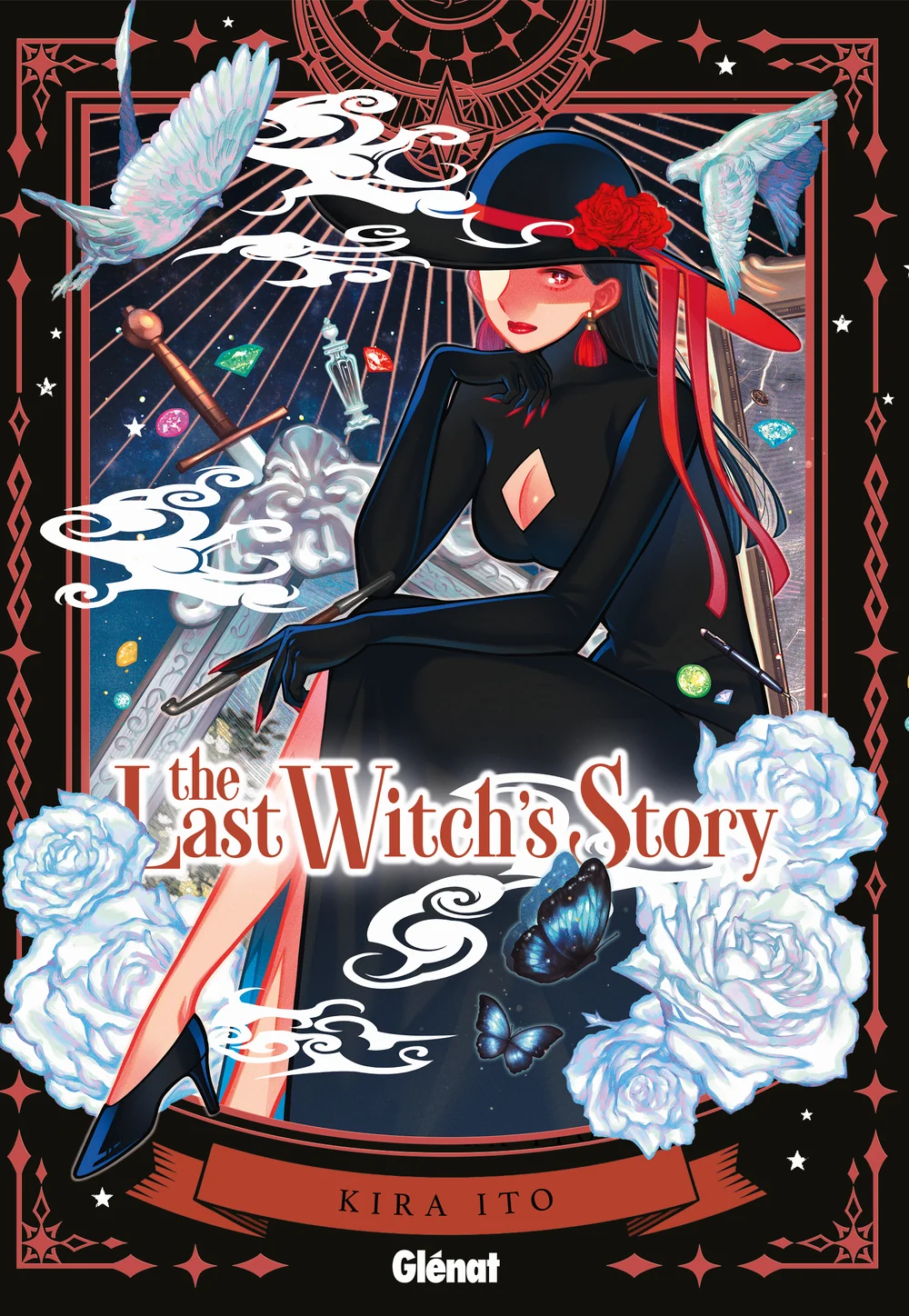
The Last Witch's Story © Kira Ito 2025 / KADOKAWA CORPORATION. French edition Glénat. Reproduction subject to permission.
To write the last report of his life, a journalist decides to interview witches one by one. From that simple idea, Kira Ito draws a book of farewells: six stories, six women who have crossed the centuries, and always the same question underneath. What is left of a witch once the world has stopped believing in her?
The Last Witch's Story (Saigo no Majo no Monogatari) is a one-shot by Kira Ito, published in Japan by KADOKAWA and released in France by Glénat on 21 October 2026. 212 pages in black and white, shelved under seinen. The tone, though, is that of a fairy tale for adults: this is intimate drama, not action.
The through-line is a single character: Megumi Tachibana, a Japanese journalist for Wonderland, a fifty-year-old magazine specialising in great mysteries and fantastical creatures. His job, he says, is to “tell the true from the false”. From Rye, a small town in southern England, to the ends of the earth, he knocks on the doors of the last witches to gather their testimony before it fades.
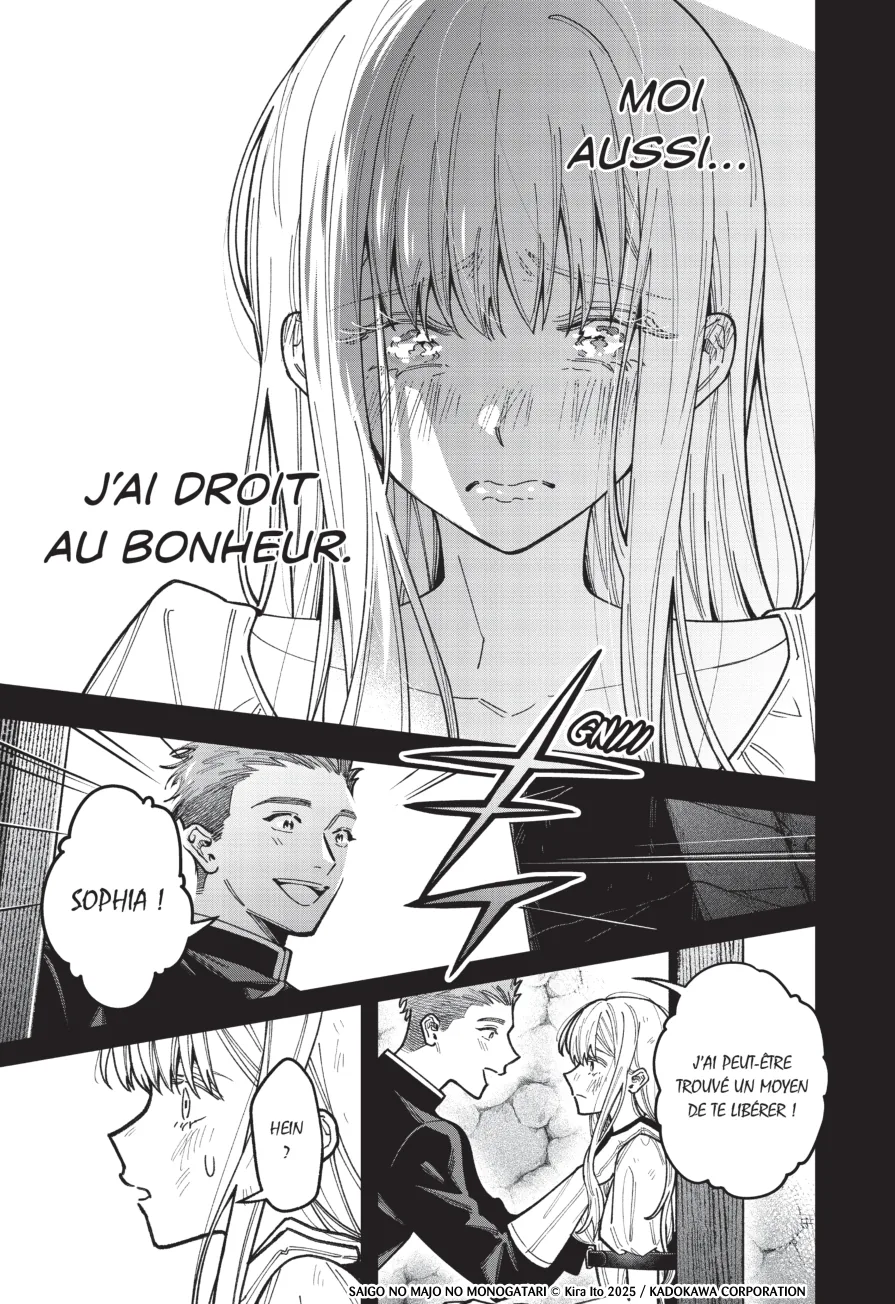
The volume is built as six chapters, each named after a witch: Abigail, the witch of war; Sophia, the witch of love; Heinrich and Katarina, the twins of lightning; Charlotte, the witch of dusk; Helen, the witch of dawn; and finally Noah, the last witch. Six short stories that answer one another and close on an ending that casts light back over everything before it.
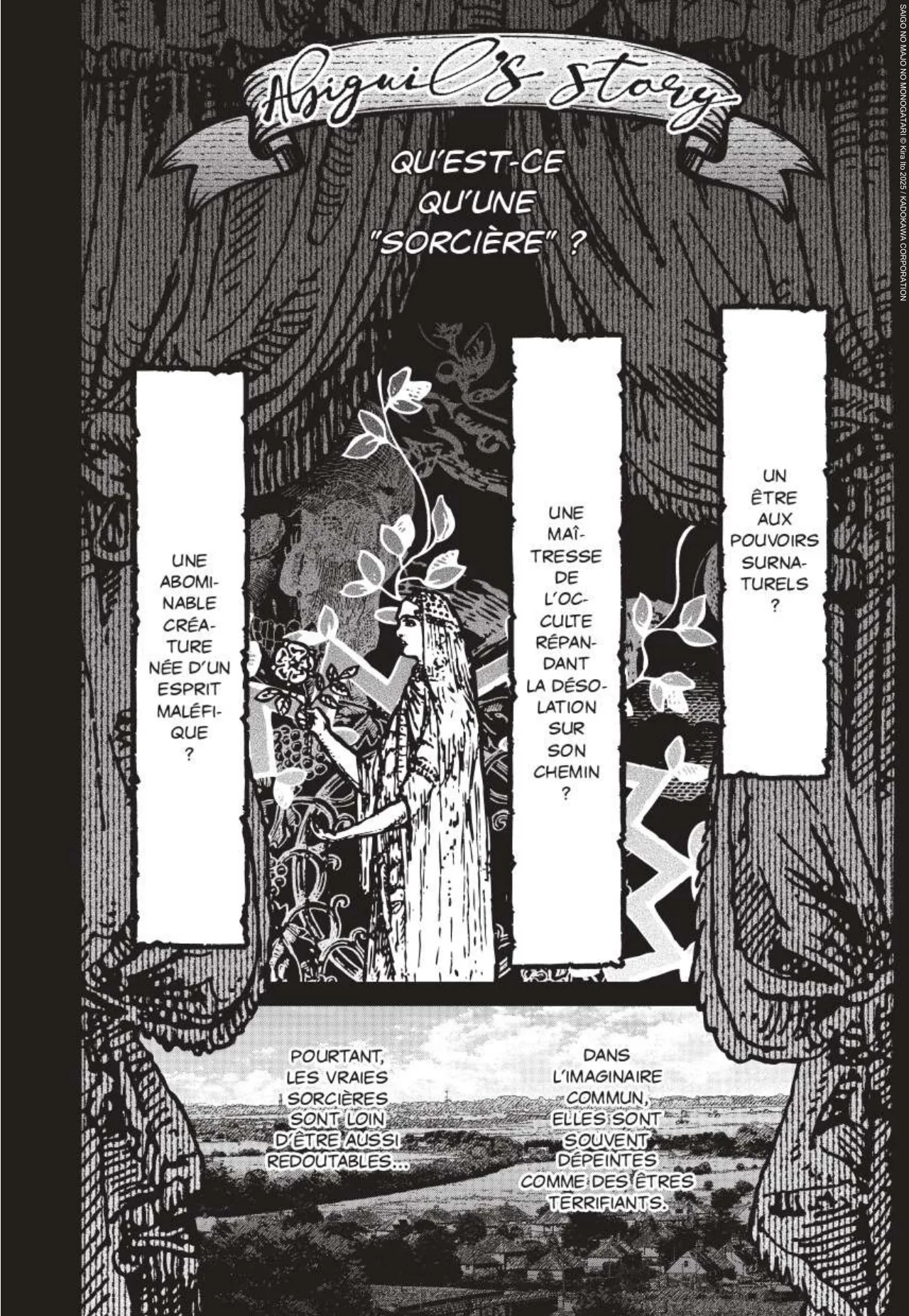
“Maybe you've simply never met one.”The Last Witch's Story, first page
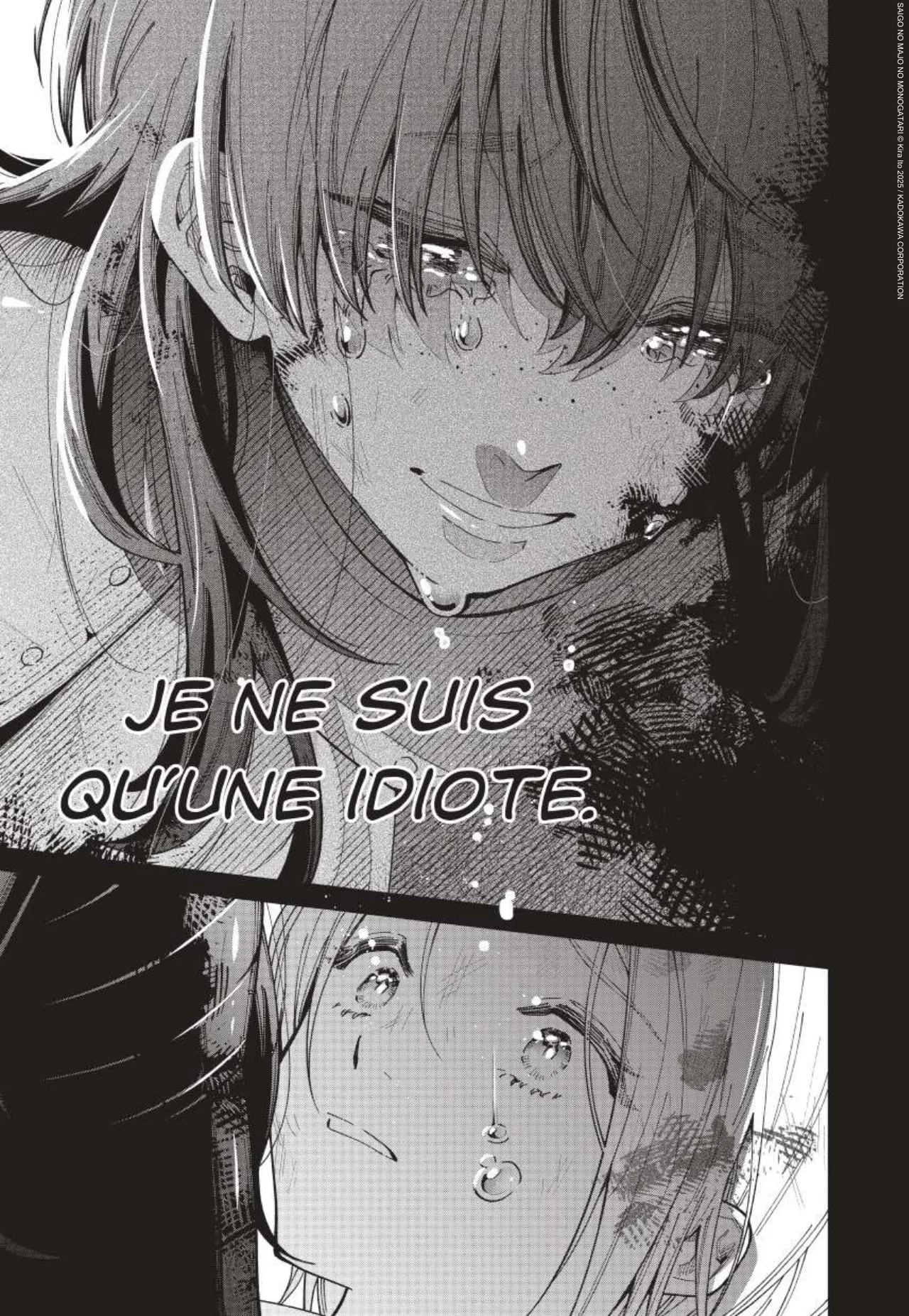
Behind the fantastical anthology, The Last Witch's Story is really about solitude and memory. Each witch has loved, fought, lost, and outlived everyone she loved. What Megumi gathers across the interviews is not powers but griefs. Hence the melancholy that settles in, story after story.
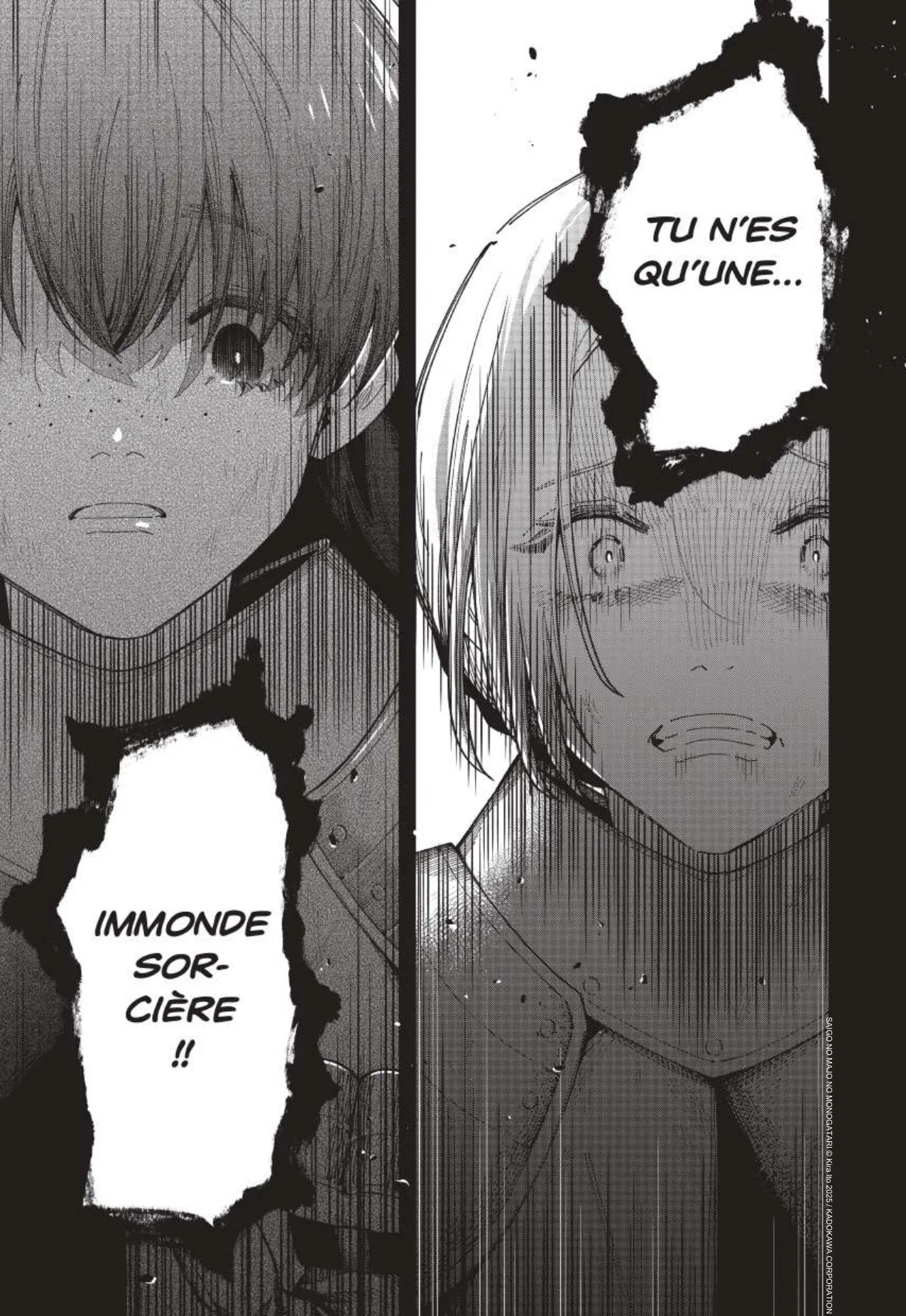
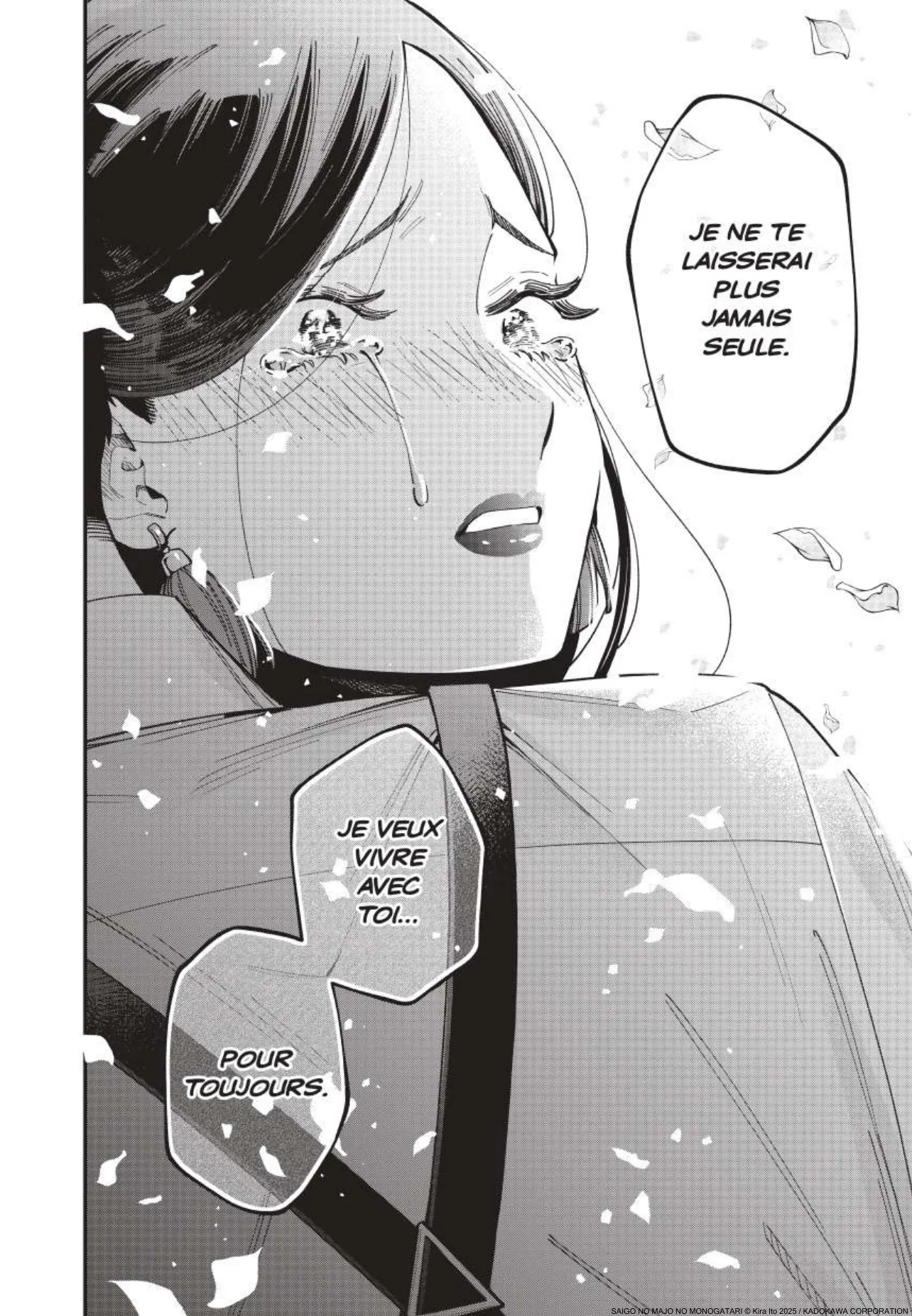
The book's great strength is its art. Ito keeps a fine, "clear-line" touch for faces and intimate moments, then tips into atmospheric pages where gothic engravings and blocks of black take over. The opening colour pages set the tone: a macabre elegance, red and gold on an ink-black ground.
The anthology format is also its limit. Six stories in 200 pages leaves little room: some witches stay with you (Abigail, Sophia), others pass a little too quickly. Because these are all farewell stories, the register barely shifts, and the repetition of "last times" eventually wearies anyone whom melancholy leaves cold.
The emotional wager, though, pays off. The best chapters catch the reader off guard, and the resolution around Noah gives the whole thing meaning again, Megumi included: the book ends up revealing that he was never a mere observer.
Strengths
- Gorgeous art that changes register with each witch without ever losing itself.
- Real emotional weight: several chapters land exactly right.
- A clear concept (interviewing the last witches) that holds from first page to last.
- A complete one-shot: a story that begins and ends, rare enough to be worth noting.
Weaknesses
- The short format leaves some witches as little more than sketches.
- A very uniform register, with little breathing room between two dramas.
- A few threads (including the final reveal) can be guessed well ahead of time.
- A hard-to-pin audience: too gentle for fans of muscular seinen, too dark for younger readers.
Who is it for?
- Readers who love short-story collections and melancholy adult fables.
- Anyone drawn to beautiful art and gothic atmospheres.
- Those who like intimate witch stories (in the lineage of Witch Hat Atelier for the emotion, not the adventure).
Skip it if…
- You're after action, spectacular magic or a power system.
- Sad stories and bittersweet endings aren't your cup of tea.
- You'd rather have a long, serialised plot than a collection of short stories.
The verdict
An elegant one-shot, carried by magnificent art and a handful of memorable chapters. The anthology shape makes it uneven, inevitably, but it remains a beautiful book, whole and singular, the kind you happily give as a gift.
- Title
- The Last Witch's Story, one-shot
- Original title
- Saigo no Majo no Monogatari (最後の魔女の物語)
- Author
- Kira Ito (story & art)
- Publisher
- Glénat (orig. KADOKAWA)
- French release
- 21 October 2026
- Format
- 212 pages · B&W (colour insert) · complete one-shot
- ISBN
- 978-2-344-07616-3

Read next
All our reviews & interviews →
Credits & rights. Cover, colour insert and interior pages: The Last Witch's Story © Kira Ito 2025 / KADOKAWA CORPORATION, French edition Glénat. Visuals from the publisher's press kit, reproduced for the purpose of review; the work may not be reproduced without permission. Reproduction and text/data mining for AI training prohibited without authorisation (art. 4(3) EU dir. 2019/790). Layout: editorial content to be finalised.