Reading hub · Video-game shōnen · ongoing
Shangri-La Frontier
A trash-game hunter finally takes on a game worth playing.
Rakuro Hizutome, a Japanese high schooler who specializes in video game “trash” (the terrible games he forces himself to finish), dives into Shangri-La Frontier, a VR MMORPG boasting thirty million players. Under the handle Sunraku, he takes on the game's seven most feared unique monsters, the “Seven Supremes”, while his life as a high schooler keeps going in parallel. Katarina (story) and Ryosuke Fuji (art) build a video-game system that's taken dead seriously, where every boss hides a tragedy and victory never comes without a cost.
Full read of all 22 released volumes, updated with every new one. Volume 23 is announced for February 2027.
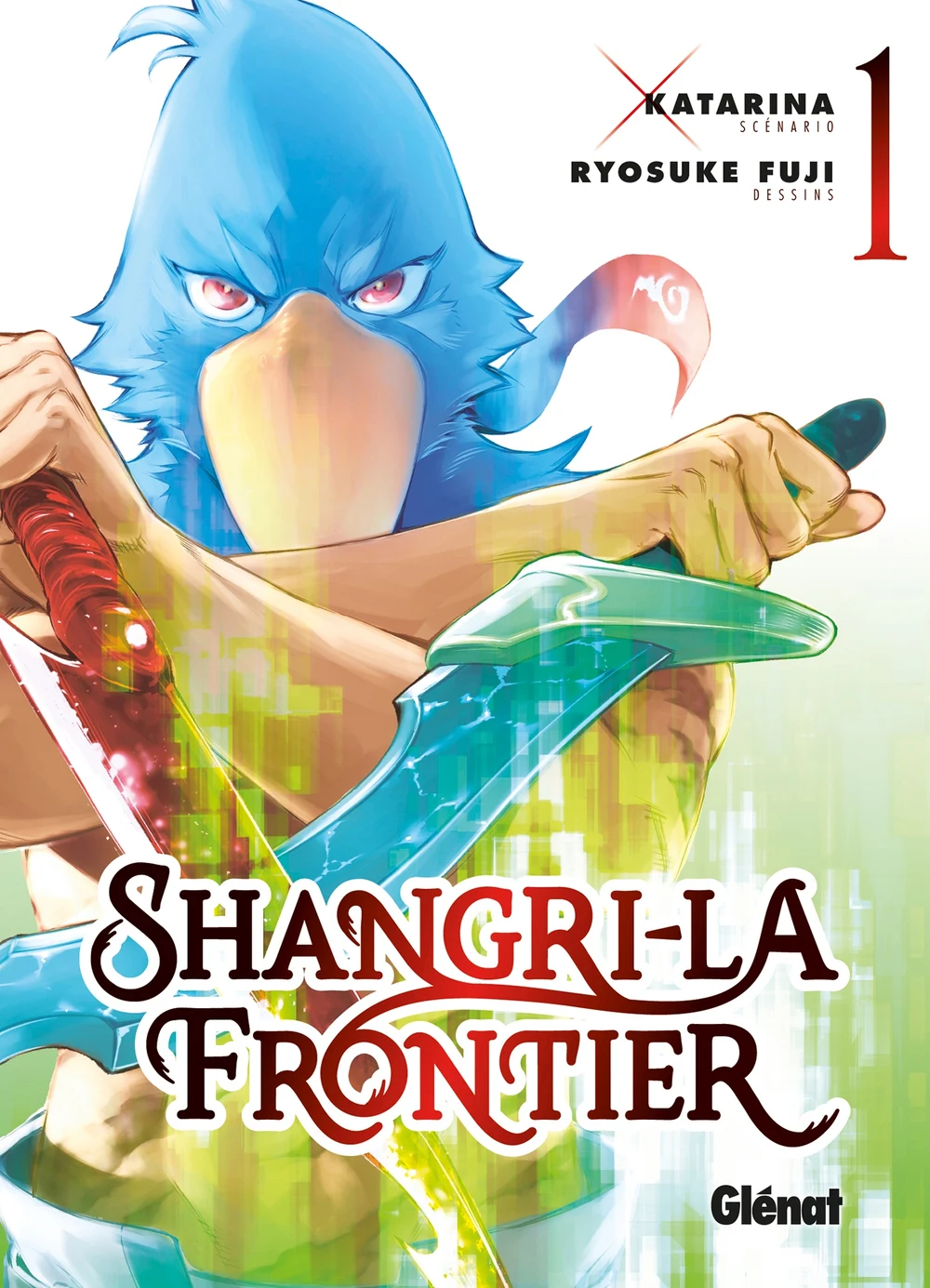
© 2020 Katarina, Ryosuke Fuji / KODANSHA Ltd. French edition by Glénat.
Shangri-La Frontier follows Rakuro Hizutome, a high schooler who has just finished Faeria Chronicle Online, an MMORPG legendary for how bad it is, and who then dives into the exact opposite: Shangri-La Frontier, a cult game praised by thirty million players. Under the handle Sunraku, a masked mercenary wielding twin blades, he very quickly runs into a unique monster, Lycaon, the Nightfangs, one of the seven “Supremes” haunting the game, and comes out of it marked with a curse. Victory after victory against these legendary bosses (Wezaemon the Tomb Keeper, Kthaanid of the Abyss), the series builds a genuine game system, complete with stats, hidden classes and secret zones, all while digging at a question that keeps resurfacing: who designed this world, and why does every one of these monsters seem to carry a tragedy rather than just a boss sheet. Katarina and Ryosuke Fuji alternate this grind with Rakuro's real life (high school, family, an international esports tournament) without ever losing the thread that keeps such a long story going: the curiosity of a jaded gamer who has finally found a game worthy of him.
Arcs 1 through 5 are set after a full read of every released volume. Arc 6 stays open: volume 22, the latest released, ends on an explicit cliffhanger.
Arc 1First steps into Shangri-La FrontierV1–V2
Vol. 1arriving in Shangri-La Frontier, the defeat against Lycaon7/10
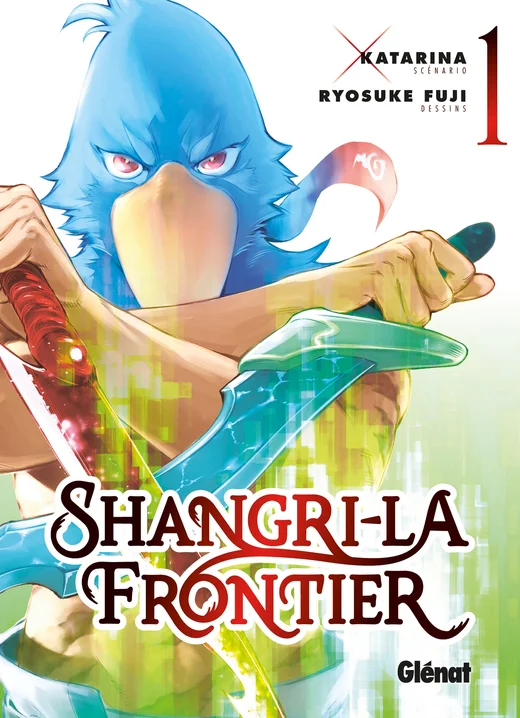
Rakuro Hizutome, a first-year high schooler nicknamed Sunraku, has just finished Faeria Chronicle Online (a.k.a. “Fae-crap”), a legendary piece of video-game trash, before jumping into Shangri-La Frontier, a VR MMORPG boasting thirty million players. He creates his character, a twin-bladed mercenary wearing an eagle-faced mask, still called Sunraku, and starts out alone in the Overgrown Forest. He mows down goblins, hunts the rare vorpal rabbits for their knives, takes down the zone boss (the Great Ravenous Serpent) at the gate of Secondil, then runs into two other players, Reiji and Mia, along the way. Heading to Third Rema through the Marsh of Despair, he fights a Crabmunch and keeps levelling up by forging his gear.
At night, he stumbles on a unique monster, Lycaon, the Nightfangs, one of the game's seven “Supremes”: the fight goes badly, Sunraku ends up at 1 HP and receives “Lycaon's mark”, a curse that now stops him from equipping chest and leg gear. While rebuilding his stats, he triggers a hidden unique scenario, “Invitation to the Rabbit Kingdom”, meets the rabbit girl Emul and then chief Viceash, who takes him under his wing and has him wear the “Vorpal Spirit Collar” (experience halved) in exchange for training. The volume ends with the arrival of an unknown player ranked as a player killer, Arthur Pencilgon, who offers to teach Sunraku a few tricks before he faces “that dog” again.
The pointThe volume works first as a world tutorial seen through a jaded, grumpy player, which makes some fairly technical video-game mechanics (crits, bugs, hitboxes) easy to follow without ever drowning the action. The loss to Lycaon finally gives the story a concrete stake, with a real physical consequence. The Rabbit Kingdom arc, on the other hand, slows down noticeably toward the end, weighed down by exposition and in-world guide boxes.
Vol. 2the marsh boss, the viral manhunt, the vorpal colosseum challenge7/10
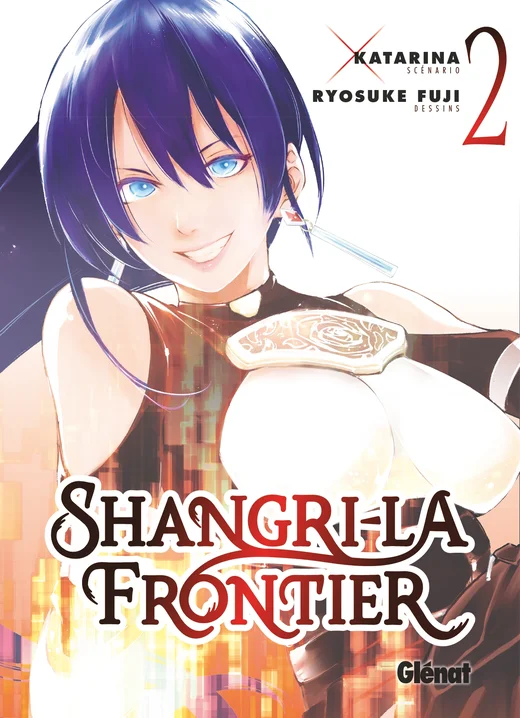
In the back alleys of Secondil, the rabbit mage Emul officially joins Sunraku's party before their trip to Third Rema. On the way, in the Marsh of Despair, the duo takes on the zone boss Mud Dig, a mole-shark that traps players in the mud; Sunraku beats it by causing a fall with Emul's teleport. But a photo of Sunraku with a talking rabbit leaks on the Shanfro forums: players take it as proof he carries Lycaon's mark, and the manhunt begins. Pencilgon, second-in-command of the player-killer guild Ashura, confronts him to squeeze out information, while a flashback reveals that Sunraku and his friend Kattsuo-Tataki once helped this very player overthrow a tyrannical empress in another game.
Spotted by other high-level players, including Saiga 0, who already seems to know Sunraku under his real name, he narrowly escapes a pack of bounty-hunting player killers before being whisked away to Third Rema. Once there, Emul takes him to the vorpal colosseum for the hidden unique scenario “Invitation to the Rabbit Kingdom”: win ten fights in a row, armed only with vorpal weapons. The volume runs through the first nine duels before the tenth opponent, Losers Woods, a humanoid fused with trees whose roots are invulnerable: the only win condition is surviving five minutes. The volume ends mid-fight, with an exhausted Sunraku bargaining through the final two minutes.
The pointThe fights remain the volume's strength: every technique is named and explained like a real game mechanic, and the “number of attempts” counter shown over the first nine colosseum duels nicely captures the feel of grinding. The player-killer plot and the real-identity reveals, on the other hand, pile up fast for so few pages, which dilutes the tension set up by Lycaon's curse in the previous volume.
Arc 2The Tomb KeeperV3–V5
Vol. 3the vorpal colosseum wraps up, gearing up for Wezaemon7.5/10
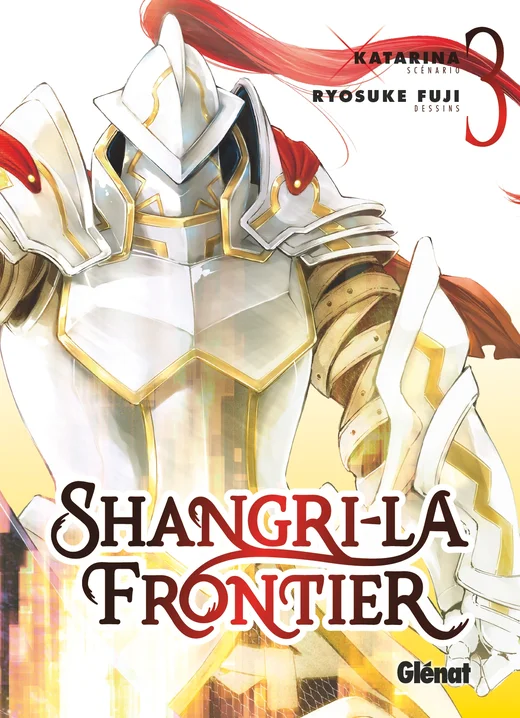
Sunraku finishes off Losers Woods by stealing his staff and knocking him out, closing the “Invitation to the Rabbit Kingdom” scenario; he earns the title of honorary citizen of Rabbit and the vorpal spirit, but stays stuck in his werewolf-rabbit look. Disguised as an Egyptian idol-god to hide the curse, he explores three new zones with Emul and her little brother Peats, while dodging a band of player killers led by Saiga 0, who has seen through his disguise. He solo-clears the zone boss Clown Spider, already seen earlier terrorizing a trio of unrelated players.
A flashback reveals how the whole project started: in another game, the player Crayon brings Sunraku and Kattsuo-Tataki together to prepare a three-person raid against Wezaemon, the Tomb Keeper, one of the Seven Supremes who has just crushed the fifteen best players of the Ashura guild. Emul and Peats turn out to be the children of Viceash, Rabbit's king and master blacksmith, who forges Sunraku a pair of twin vorpal blades too demanding for his current level. Sunraku, Emul and Kattsuo (whose real identity as a pro gamer is revealed) then grind levels before asking an NPC, Setsuna of Old, for help ahead of the final assault on Wezaemon.
The pointThe volume comfortably alternates pure comedy and serious boss-raid setup without either one crowding out the other. The level requirement (he can't wield the new blades until his stats catch up) gives the grinding arc a real tactical breather. The sheer number of side characters introduced at once makes parts of it a harder read.
Vol. 4the three-way assault on Wezaemon, the Tomb Keeper7.5/10
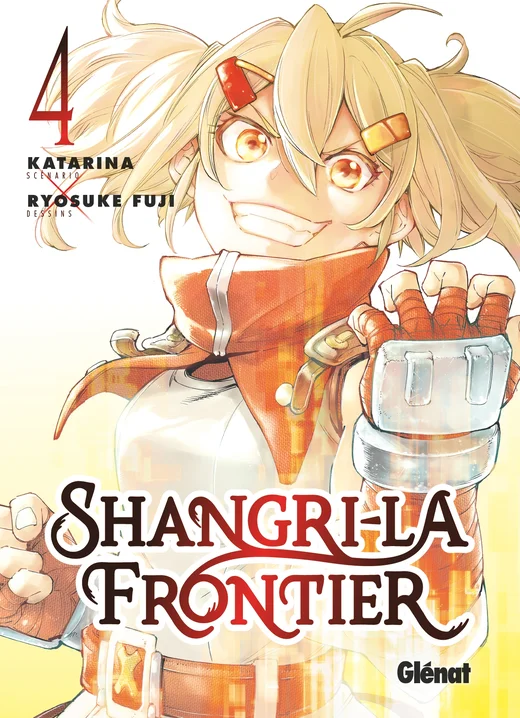
Sunraku explores a secret zone and meets Setsuna of Old again, an NPC whose humanity feels unsettlingly real; she tells him her own story and that of Wezaemon, the unique monster chained to his own tomb, and asks him to help set him free. Back in the real world, Rakuro Hizutome shares a meal with his mother Eika, his father Senji and his little sister Rumi before resuming training, then gears up through the Ashura guild for the fight against Wezaemon due at the next new moon.
While a coalition of rival clans attacks the Ashura guild to stop Sunraku from reaching Wezaemon first, Sunraku, Arthur Pencilgon and Oikattsuo show up anyway in front of the Tomb Keeper. The fight unfolds in timed phases: survive ten minutes of sword attacks, stop Wezaemon from fusing with his mechanical mount Kirin, then hold out against undead and a devastating attack before the boss's announced self-destruction. The volume ends mid-fight, with no winner decided.
The pointThe Wezaemon fight works because it's broken into clear rules that give every minute a real tactical stake, carried by the complementary roles of strategist Pencilgon and archaeologist Oikattsuo. The five opening chapters of prep delay the promised fight for a long time, and the sheer amount of system jargon takes effort to follow.
Vol. 5Wezaemon's fall and Setsuna's reveal7.5/10
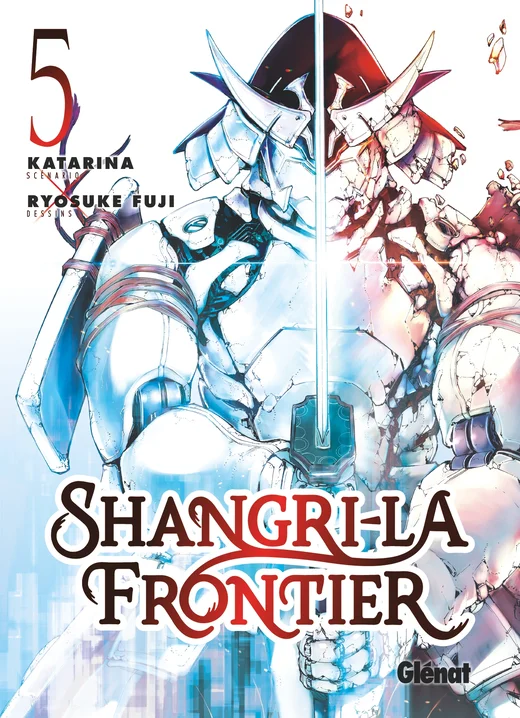
Sunraku finishes his duel to the death against Wezaemon Amatsuki. While Oikattsuo and Arthur Pencilgon keep Wezaemon's mounted golem, Kirin, busy at range, Sunraku takes the close-range hits alone: he survives the final combo at one hit point thanks to a passive skill, then finally breaks through Wezaemon's guard with his Vorpal Crescent enchantment. The fight reveals that Wezaemon is actually guarding the tomb of Setsuna Amatsuki, a woman he loved: his defeat brings up a trace of her, who thanks the three players, introduces herself as a copy of the past rather than the real Setsuna, says goodbye to Pencilgon and points him toward a monster the game officially claims doesn't exist, Bahamut.
The feat, announced to the whole server, pushes forward the game's “world story” and irritates rivals like the Wolfschwarz guild. Exhausted, the heroes are immediately attacked by a band of player killers led by a traitor, Orcelot; Saiga O, alerted by a distress signal, steps in, captures Orcelot and then faces another feared player killer, Maximum Force, in a duel that turns into a brutal close-quarters brawl.
The pointThe resolution of the duel is dense in numbers but stays tense and readable throughout, and the Setsuna/Bahamut twist finally gives it real emotional weight and a story direction. The volume immediately moves on to the player-killer brawl without letting the victory breathe.
Arc 3Stray Wolf, Be AmbitiousV6–V10
Vol. 6the Wolfgang clan, the hunt for a legendary weapon6.5/10
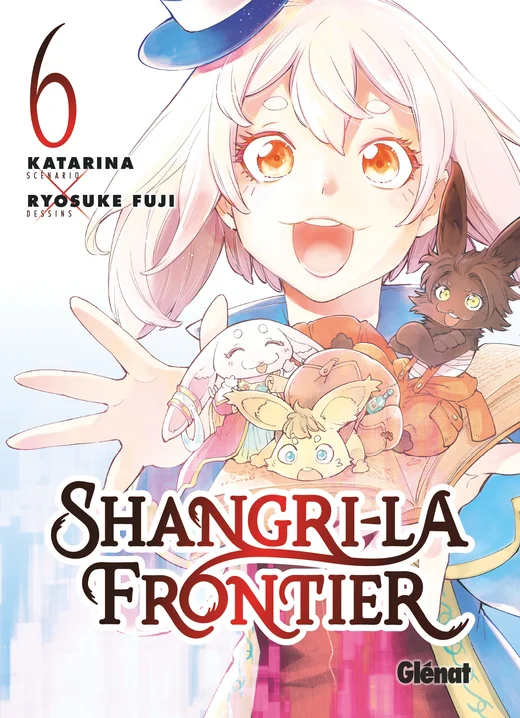
The volume opens on the real-world side: at Utopia, the studio behind Shangri-La Frontier, the team is reeling from Wezaemon's defeat, a boss that was supposed to stay unbeatable for another ten years. Back in the game: Sunraku, now level 78, goes to pay his respects at Wezaemon's tomb and runs into Setsuna again, who mentions a “truth about the world” to look for near “Bahamut”. With Oikattsuo and Arthur Pencilgon, he founds a clan, Wolfgang, which he ends up leading, and sets off with his new archaeo-blacksmith Biluck to find a Legacy Weapon that can fix his broken ether-reactor.
The quest leads to two fights: a rare enemy, General Dullahan, then the zone boss, Humming Lich, one of the Seven Supremes, a sorcerer skeleton that splits into seven clones and can only be hurt by a blessed blade, forcing the group to manage a weapon that wears out with use. After the win, Sunraku heads off alone to explore the Quartz Nesting Cliffs, where he dies several times before extracting a rare ore, closing the volume on a “to be continued”.
The pointThe volume mostly runs on its tactical-constraint scenes against Humming Lich and on the studio-side detour, which gives real comic weight to Sunraku's feat. The progress stays almost entirely logistical, though (fix an item, gather an ore), and the “truth about the world” thread set up at the start doesn't move forward afterward.
Vol. 7weapon forging, ancient ruins, the guild alliance7/10
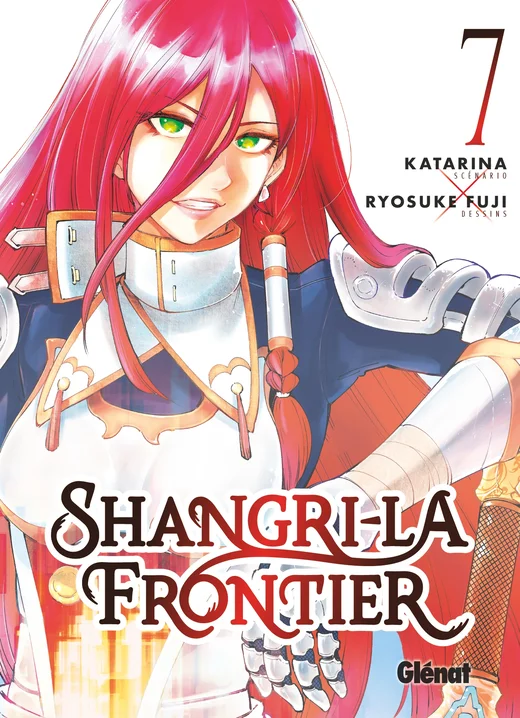
Sunraku farms the Quartz Cliffs alone before meeting Aramis, vice-captain of the Musketeers of Catseria, who forges him a weapon. The Professor, head of the Bibli clan that specializes in studying the game's mysteries, sees through Sunraku's disguise and offers him an alliance to get to the truth of the world. With Aramis, Biluck and Emul, Sunraku then explores a maze of golems left over from the Age of Gods, looking for a part Biluck needs to earn her archaeo-blacksmith title.
Back in town, Sunraku's fame since beating Wezaemon draws the heads of the big guilds: Saiga 100, a Lycaon specialist, and the leader of the Zoo of SF clan. Over a table, the four of them trade information: Lycaon's odd behavior during his one fight with Sunraku, the existence of two more unique monsters on the new continent, Kthaanid of the Abyss and Siegwurm, and a book about the truth of the world. The talk ends in an alliance between the three clans.
The pointThe volume runs on two very different engines: a classic dungeon crawl, then, in its second half, a wall of exposition where four guild leaders lay out the stakes of the next arc. The Lycaon plot and the two new unique monsters finally revive the long-sidelined mystery of the world's nature, but the zombie attack and the alliance talks move too fast to actually land.
Vol. 8the Goldpion falls, the turn toward Nephilim Hollow7.5/10
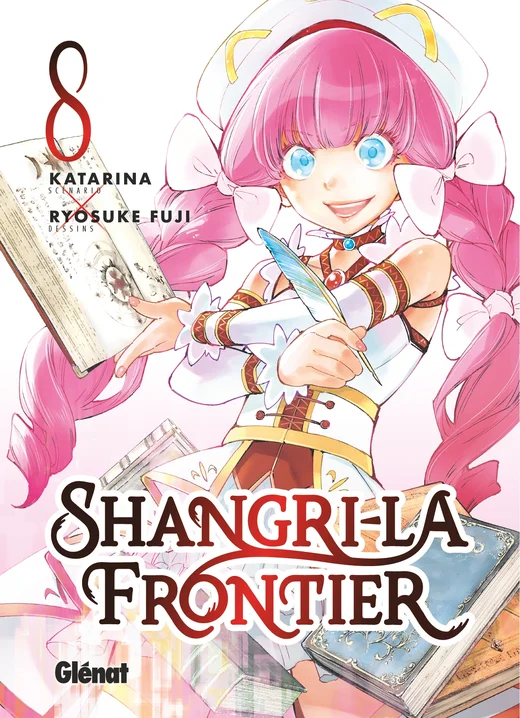
In the Quartz Nesting Cliffs, Sunraku farms Quartzpions, levels up his Moon Jumper skill, and runs into a Goldpion, a much tougher rare variant, which he finally takes down after a hard fight, jumping straight from level 79 to level 99 in one go.
Back in real life, bored with the routine of Shangri-La Frontier, Sunraku reopens Nephilim Hollow, a mind-piloted giant-robot fighting game. With his robot King Fisher he easily beats a first opponent, then faces Rust, an undefeated player, who thoroughly outclasses him. For his rematch, he has his friend Mold build him a new machine built around trickery, Fiddler Crab. The volume ends mid-second-duel against Rust: Sunraku finally manages to land a hit on her, but she promises not to be caught off guard twice.
The pointClosing out the Goldpion arc works well, with a well-earned win and a spectacular level jump. The pivot to Nephilim Hollow is a refreshing change of pace that gives Sunraku a brand-new, well-drawn rival, but the new game arrives with a quick pile-up of lore and side characters that stay purely functional.
Vol. 9beating Rust, the real Lycaon's ambush7.5/10
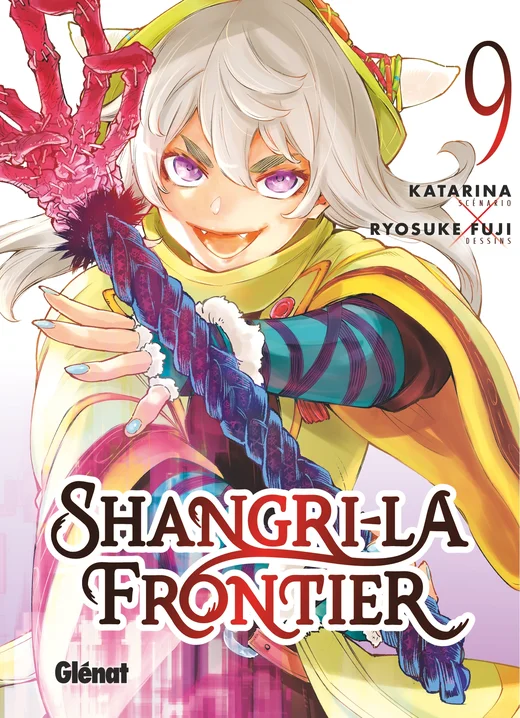
Sunraku wins his robot duel against Rust thanks to his Pizzacut Wing skill. Back in the main game, he trades information about Kthaanid of the Abyss, finally hits level 99, and solo-clears a zone boss in record time to catch up with his allies in time.
With Saiga 0, he crosses a zone where they find clues leading to an extended unique scenario. In Fiftycia, they witness a clan's operation to capture Lycaon, the Nightfangs: the capture team manages to chain it, but the creature turns out to be a decoy, and the real Lycaon bursts out of the shadows and slaughters the group. Refusing to let it be put down once chained and drained, Sunraku frees it to fight it alone, at level 99, in a final clash that's left unresolved.
The pointThe showpiece moments (the duel against Rust, the timed solo clear, the second Lycaon ambush) are crisp and well-paced, and Sunraku's choice to give Lycaon a fair fight instead of watching it get executed while chained gives the volume a real moral spine. A good chunk of the volume runs heavy on exposition, though, which noticeably slows the pace between action scenes.
Vol. 10the fake Lycaon goes down, the hunt resumes7/10
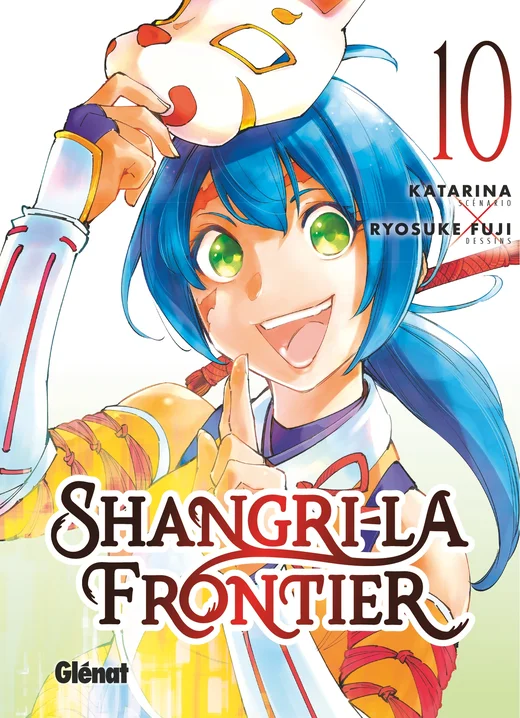
Sunraku, Rei and a new ally, Akane Akitsu, take on Lycaon, the Nightfangs. Sunraku deploys his mecha-bird Suzaku, while Saiga O pulls out his secret trump card, the Armageddon attack, whose backlash drops him to one hit point. The combined assault finally takes down what the group believes is Lycaon, and Sunraku earns the title of Shadow Wolf Slayer.
The victory is short-lived: instead of fading, the curse marks intensify, proof they've only beaten a clone. The group gets a tracking mode to locate the real Lycaon, then heads to Fiftycia, the port city that serves as the gateway to the New World. There Sunraku is assigned an Arcanum (secondary class) that doubles all his stats, but also every one of his drawbacks. The volume ends with the arrival of two new characters, the hunt for the real Lycaon still wide open.
The pointThe volume spends almost its entire length on a single boss fight, with an effective twist: the victory the reader assumes is locked in gets pulled back two pages later, without feeling like a cheat since the clue had been planted earlier. The pace is dense with game jargon, which is followable from context but slows the reading down.
Arc 4The Call of the AbyssV11–V12
Vol. 11farewell to Lycaon, the expedition into the abyss7/10
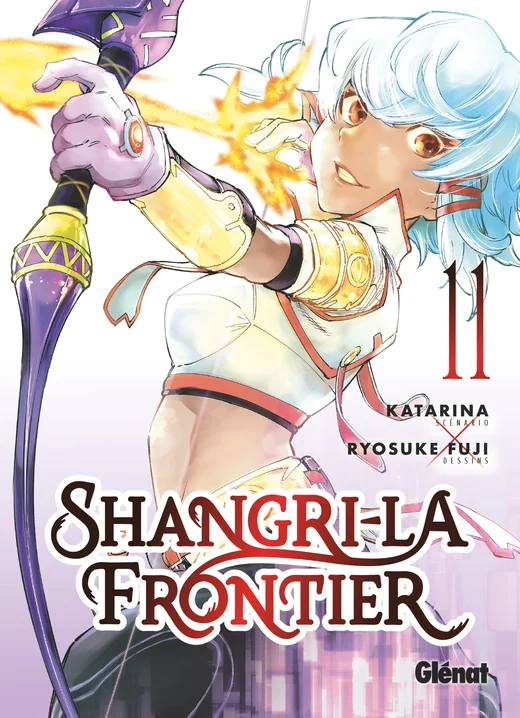
Fresh off his win over Lycaon, Sunraku draws a rare Arcanum, the Fool (halved recast time, but doubled debuffs and malus duration), clears level 99 and unlocks the Extend. The volume takes time to close out the previous arc with a round of goodbyes to his allies of circumstance, then a detour into the real world reveals that Pencilgon, deep in debt after his loss to Wezaemon, has to sell off rare weapons to pay it down, while Oikattsuo, a pro gamer, recruits Sunraku as a last-minute reinforcement for the Global Game Competition. At the shipyard in Fiftycia, Sunraku runs into Rust and Mold, who tell him about a unique scenario leading to the pirate boy Stude, set on avenging his father, killed by the ghost ship Crying Innsman.
Aboard the Scarlet Whale, Sunraku and Stude fight the Crying Innsman's sea monsters in an escort mission that nearly turns into a disaster. The arrival of Kthaanid of the Abyss, a titanic entity whose tentacles can grab an entire island, swallows the ship and the whole expedition into R'lyus, a sunken city, where a 167-hour countdown starts immediately. Separated from the group, Sunraku wanders alone through the underwater ruins before the volume ends on an unexpected appearance that leaves the rest hanging.
The pointThe volume plays its hinge role well: it properly wraps up the Lycaon arc and plants the seeds for the upcoming tournament arc before launching a sea adventure that builds to a spectacular cliffhanger. Kthaanid's sudden arrival at the end of the volume shifts the story's scale without much setup, and splitting the book into three fairly self-contained blocks hurts the overall flow a little.
Vol. 12the inverted city of R'lyus, first steps at the GGC7/10
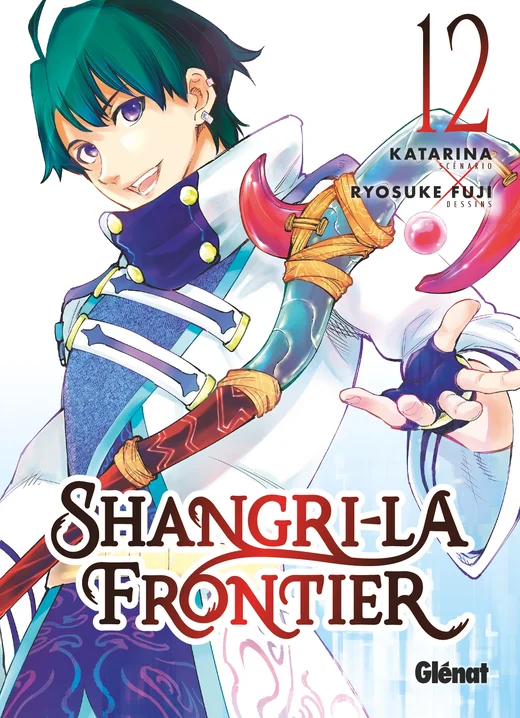
Still up against Kthaanid of the Abyss, whose inversion power has flipped R'lyus, a sunken capital, upside down, Sunraku explores the city with Alaba, a shark merman. The group, soon joined by several allies, has to fight a giant fish-monster that swims just as well through air as through water: Sunraku eventually beats it, after which the group takes stock, with seven days of “abyssal time limit” left to crack the secret of Kthaanid's power.
The story then shifts to the real world: Rakuro heads to Tokyo to attend the Global Game Competition at the invitation of Kei Uomi, his in-game ally. Put up in a luxury hotel, he meets his two new teammates before facing the American team Star Rain and their undefeated champion, Silvia Goldberg, in a new crossover game, Galaxia Heroes: Chaos. A test duel against a teammate ends with a rematch that goes noticeably worse for him, and the volume closes on the announcement of a serious showdown to come.
The pointThe swing between the cosmic Kthaanid arc and the slice-of-life of a high schooler dropped into a Tokyo luxury hotel for an esports tournament is the volume's gamble, and it mostly pays off thanks to its humor and well-choreographed fights. The entire second half, however, piles on exposition about the new game's mechanics, which slows the pace right before a cliffhanger that resolves nothing.
Arc 5The World TournamentV13–V17
Vol. 13Willy, the King of the Deep, the origins of the Kei/Silvi duel6.5/10
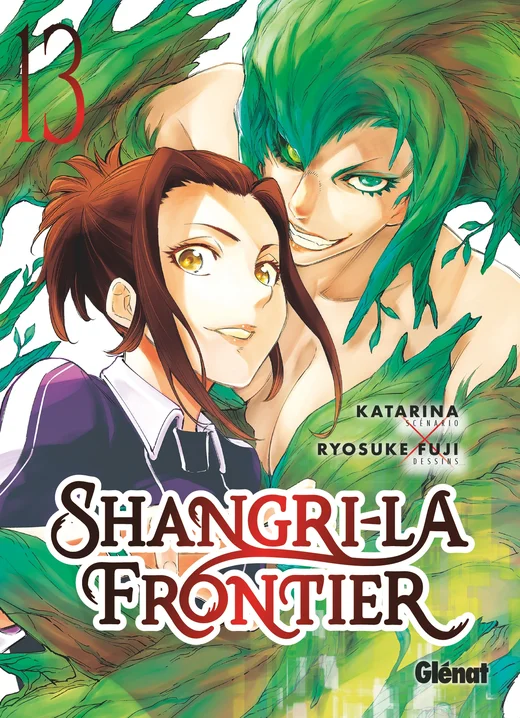
In a friendly practice match, Sunraku faces Kattsuo at Galaxia Heroes: Chaos. A flashback three years back reveals the legend of Silvia Goldberg, real name Kei Uomi, an undefeated champion now demanding a real duel against Sunraku. Back in the present, Sunraku logs into Shangri-La Frontier at night to clear his head and finds Alaba again in R'lyus, where fish now swim through the air thanks to Kthaanid's power.
A unique monster nicknamed Willy, King of the Deep, nearly kills Sunraku with a blast that drops him to 4 hit points. With Alaba, he comes up with a trap to take it down. The volume then shifts into a second flashback, three years earlier: Sunraku, Kattsuo and Pencilgon recruit two masked teammates to face Kei's team in an international tournament, and the volume ends with the team's entry confirmed, right before the match.
The pointThe fight against Willy works well as a self-contained mini-arc, and the scrappy camaraderie with Alaba lightens the tension of a near-death at 4 HP. The volume spends a good half of its pages on two separate flashbacks about a side fighting game, though, which cuts into the time actually spent in Shangri-La Frontier and makes the identities harder to track.
Vol. 14the GGC tournament, the masks come off6.5/10
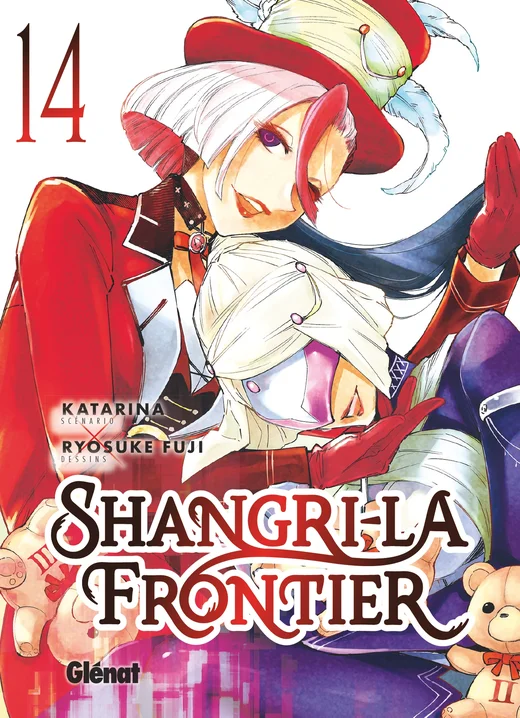
Sunraku's team joins the GGC for an exhibition match at Galaxia Heroes: Chaos against the American team Nitrosquad. Lucas, the team's brains, wins two rounds to one, and his opponent turns out to be a pro player attending incognito. On the side, the convention is used to showcase a brainwave-based real-time translation system the studio plans to launch in the fall.
Lucas then faces another masked opponent, who drops an entire skyscraper to charge her ultimate attack and wins the match two rounds to one; she turns out to be a famous fashion model. Nitrosquad takes the lead, and their fourth member, kept hidden until now, finally shows up next to their manager. The volume ends with an unrelated short story that has no bearing on the main plot.
The pointThe volume bets everything on staging the fighting game within the story, and it works, carried by well-handled double identity reveals. The catch is that Sunraku himself is barely ever at the controls: it's his teammate who fights both matches, which reduces the hero to a bystander in his own volume.
Vol. 15the Undefeated One stumbles against No Face7/10
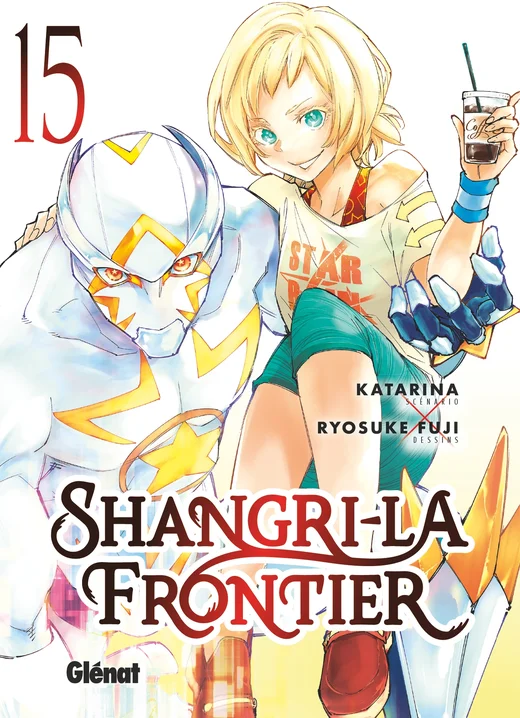
At the GGC, the members of Sunraku's clan, hiding under “villain” codenames, face off against pro gamers at Galaxia Heroes: Chaos while waiting for their teammate Kattsuo to arrive. They run through round after round until Silvia Goldberg, known as Silvi and nicknamed the Undefeated One, steps in and crushes the competition without even trying, including her own teammate.
The real goal then comes to light: provoke a duel between Silvi and Kei Uomi, hiding under the codename No Face. Against all odds, No Face takes the hits, lands the tournament's first blows on the Undefeated One and wins a round, forcing her to go all out for a third and final round that turns into a head-on clash between two ultimate techniques. The fight cuts off mid-impact, with no winner decided, carried over to the next volume.
The pointThis volume drops the MMORPG adventure entirely for a full-blown fighting-game tournament where Sunraku stays backstage. The Silvi/No Face duel works well dramatically: the Undefeated One is put in real danger for the first time. But ending the volume mid-impact, with the deciding round unplayed, is frustrating, and the pile of codenames makes it harder to keep track of who's who.
Vol. 16the GGC finals, Sunraku's defeat6.5/10
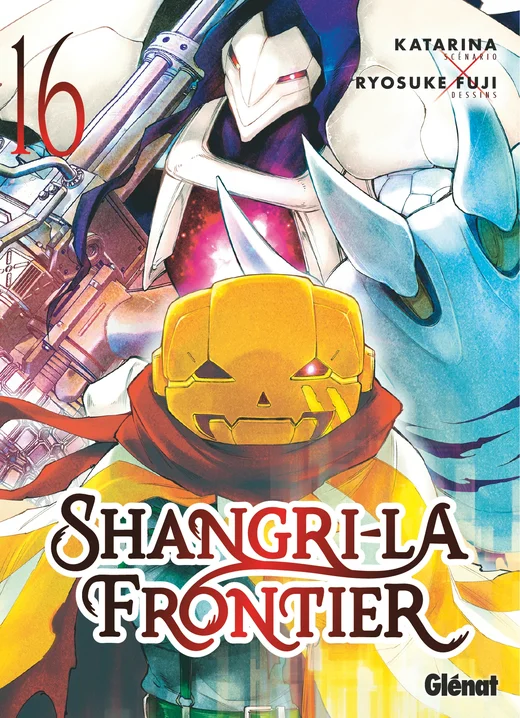
The GGC final resumes: Sunraku, hiding under the codename No Face, faces Silvia Goldberg. The first duel ends in a double knockout, but the next round clearly tips in Silvi's favor: mentally drained, Sunraku loses, and Silvi wins the match for her team.
Kei, Sunraku's teammate, then steps up to challenge Silvi in turn, under the identity K. The duel plays out over several rounds with a hidden objective: grab a cube hidden somewhere in the play area. Kei wins the first round through a feint, but Silvi, humiliated, snaps into a rage mode. After a chase to the top of a tower, she catches up to Kei right as he grabs the cube and knocks him out: the champion keeps her unbeaten record. The volume closes on this defeat and an unrelated text-only short story.
The pointThe gauge-and-time-limit system keeps every duel readable despite the dense gaming vocabulary, and the twist in Kei's round avoids simply repeating a plain boss fight. Still, the whole thing is a nearly two-hundred-page unbroken esports tournament, and Sunraku, the series' lead, loses both his duels against Silvia: the protagonist doesn't move forward here, she's the one who keeps winning.
Vol. 17Kei's win over Silvi, back to R'lyus7/10
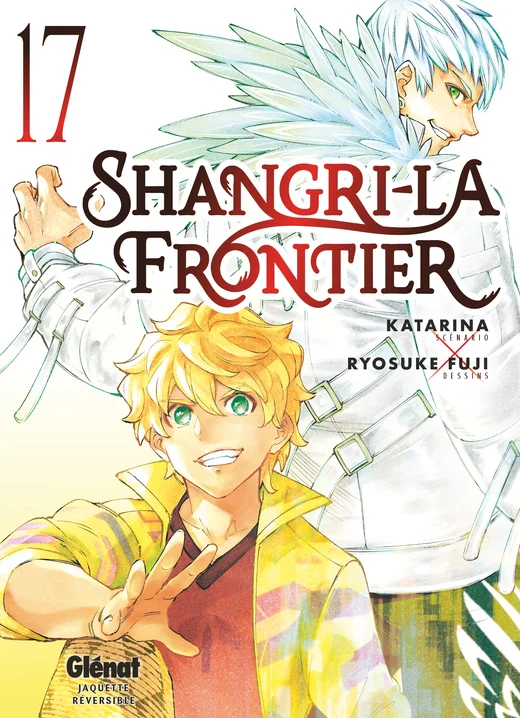
The deciding third round pits Kei Uomi against Silvia Goldberg for the cube atop the tower. Kei wins by using NPCs as makeshift human shields: Silvi, refusing to risk their lives, keeps her heroic gauge unused and loses her first match because of it. At the after-party, the players stay masked to protect their anonymity from reporters, before Sunraku, Kei Uomi, Megumi Natsume and Kattsuo end the night snacking at a bar.
There Sunraku admits that, while he was away from the game, he accidentally triggered a scenario tied to Kthaanid of the Abyss. Back in R'lyus, he finds Alaba again, stripped of his sword by a sea chimera that the two of them take down together. The group then goes after the first of the four seal generals guarding the city, a tentacled entity able to cancel out any magic; the fight, still ongoing by the end of the volume, is just starting to turn in their favor.
The pointThe Kei/Silvi twist genuinely lands: breaking the heroine's invincibility by turning her own morals against her is the volume's best moment. The after-party interlude finally gives real depth to Kei, Natsume and Kattsuo. The return to R'lyus, though, piles up side-character names in dense exposition dialogue, and the fight against the seal general recycles a pattern we've already seen.
Arc 6The Fall of KthaanidV18–
Vol. 18R'lyus's seal generals, the door to Kthaanid6.5/10
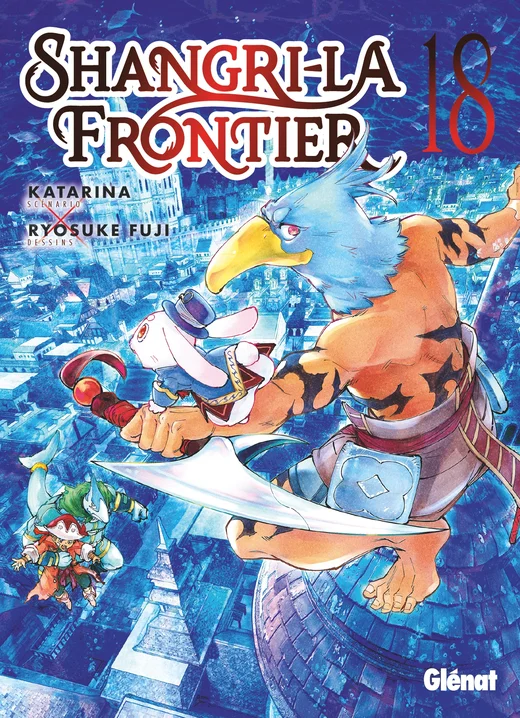
In R'lyus, Sunraku and his allies split into small teams to finish off the last seal generals guarding Kthaanid. One team beats a shell-clad knight whose cutlass belonged to the pirate boy Stude's father, and the weapon is handed back to him; another neutralizes a slow but near-unkillable general holed up in a tower. Saiga O, a player who's been gone for a long while, returns to the front line and gives herself away by calling Sunraku by his real name, revealing she knows him in real life.
The volume then shifts to the real world: Rakuro receives a professional VR chair, then tries out a brutally realistic battle royale game that caused a scandal. Back in the game, the group finishes off the last general, a monster couple immune to physical attacks, with magic melee strikes. The whole team picks a collective name, then marches on the central castle: the volume ends as they enter Kthaanid's lair, ready to fight.
The pointStude's thread, his father's pirate sword and its return, is the volume's real strength: well-measured emotion, a clean payoff. Splitting into mini-teams that each take down one general works as a game mechanic but ends up repeating itself, and the real-world chapters about the VR chair interrupt the pace right before the climax.
Vol. 19Kthaanid of the Abyss and the power of inversion6.5/10
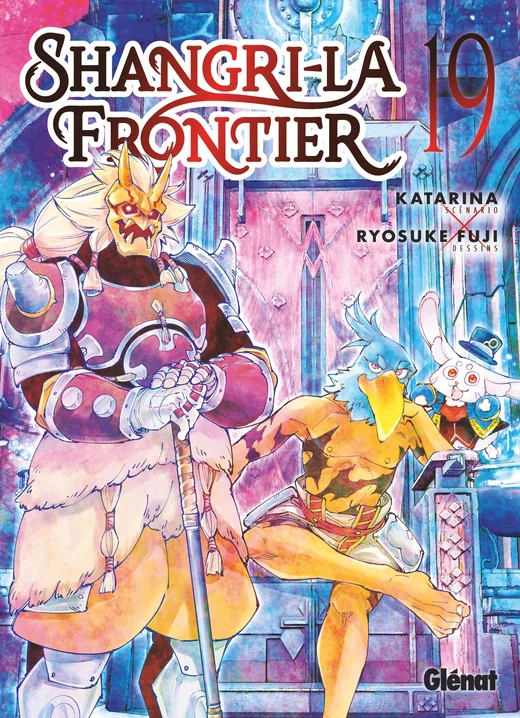
Sunraku's group explores Kthaanid's castle and runs straight into the monster itself: a giant, chained octopus. Realizing they stand no chance, Sunraku orders a retreat. To understand their opponent, the team searches the castle: a diary reveals R'lyus's history, where a god once defeated a devastating monster and, in exchange, claimed the city for himself, planning to sink it to stop that threat from ever returning. Sunraku realizes Kthaanid isn't really hostile.
The group goes back down to face him. The fight revolves around a power of total inversion: flipped gravity, inverted colors, possessed objects, then a beam that swaps the gender of every fighter. The team figures out that four chalices each power a different effect and sets out to destroy them one by one, at the cost of unexpected damage. The volume ends mid-fight, on an explicit “to be continued”.
The pointThe worldbuilding holds up: the story of the drowned monster and Kthaanid's pact give the boss real tragic weight, and the inversion theme is played out with real inventiveness rather than as a one-note visual gimmick. The volume piles on the pauses, though, and the central fight takes up almost the entire book without wrapping up, making it a pure transition volume.
Vol. 20the chalices shatter, Kthaanid's metamorphosis7.5/10
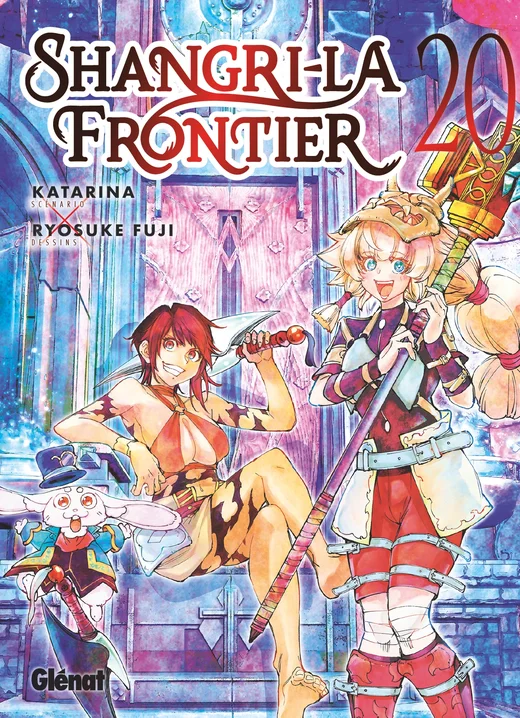
The fight against Kthaanid reaches an apparent end: the group destroys the chalices powering random inversions of stats, damage or healing one by one, up to the blow that seems to finish the monster off. But a boneless, fleshless, bloodless shadow rises from the ground: Kthaanid is still alive, and summons waves of monsters it absorbs to fuel one last transformation, before conjuring three giant unique monsters to crush the group.
Sunraku gets swallowed by one of the titans to strike the other one from the inside, and both of them fall, but Kthaanid absorbs their remains to complete its transformation. Once it reaches its final form, it unleashes an attack that copies the style and weapons of whichever player is linked to a gem embedded in its body, then a devastating blow that reduces an ally's gear to junk. The volume ends as the team discovers that this attack also weakens Kthaanid itself, right as a gem shatters under suspicious circumstances.
The pointThe escalation works by stacking game rules rather than relying on pure surprise, and a few comic beats give the fight room to breathe over a confrontation that takes up almost the whole volume. The story only moves forward through this one fight across nearly ten chapters, and the final cliffhanger rests on a stake that's still unclear.
Vol. 21the fall of Kthaanid of the Abyss7.5/10
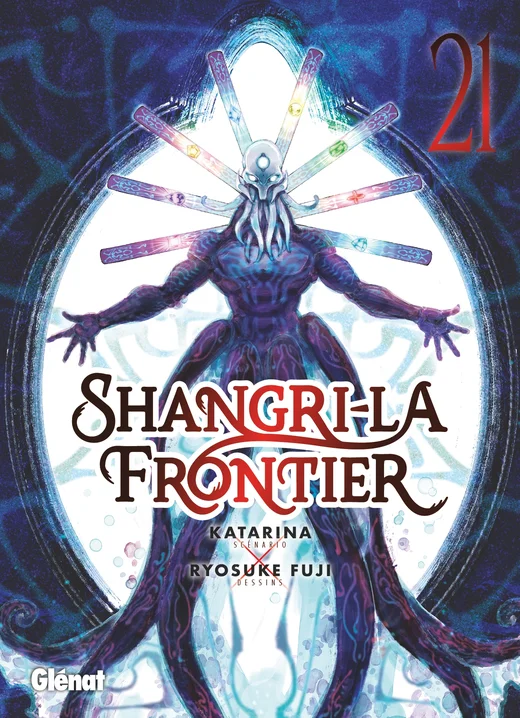
Sunraku and his team launch the final assault on Kthaanid. Rei gets ready to activate her trump card, Armageddon, while the others shatter the gems powering the monster's tentacles to limit its copying ability, at the cost of making every destroyed gem more dangerous. A first incantation fails: Kthaanid seals every weapon that was used to break a gem, leaving only Sunraku's katana usable.
A young pirate named Stude uses his father's sword to draw Kthaanid's attention and save a downed ally. Rei launches a second incantation; despite a backlash that halves her own stats, Armageddon finally lands on Kthaanid. Sunraku lands the opening blow, before the last attacks finish the fight. With Kthaanid defeated, the volume closes on a brief epilogue hinting at a sage from a golden age who once raised heroes to face a calamity, the same heroes who now seem to have become the Seven Supremes.
The pointThe fight holds up across nearly two hundred pages without running out of steam, thanks to a well-oiled game mechanic that creates real tactical constraints rather than a plain button-mashing brawl. The finale stretches between the failed first incantation and the successful second one, and the lore scene about the sage and the fallen heroes arrives abruptly, more as a promise for later than as a resolution.
Vol. 22guild warfare, an uncontrollable power left on a cliffhanger6.5/10
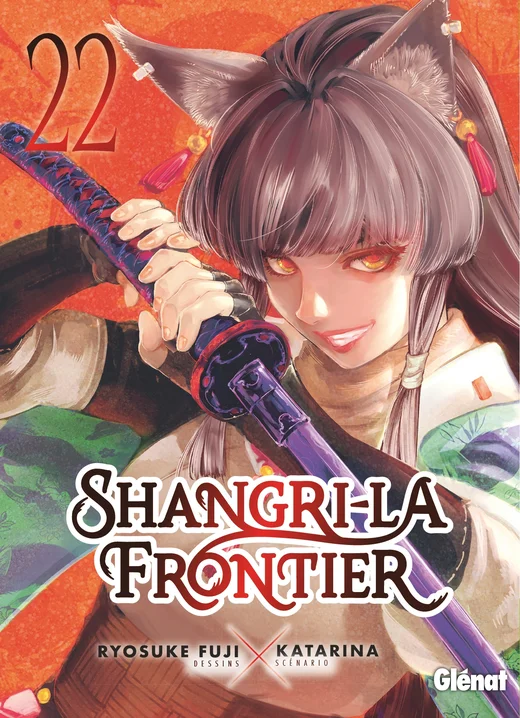
The volume opens on the very end of the fight against Kthaanid, who rewards Sunraku's group with magic chalices right before R'lyus is overrun by a horde of “primordial ghosts”. The group flees, fights off revived seal generals, then surfaces again, towed by Kthaanid itself: the entire fight turns out to have been a world scenario meant to reseal this very horde. Back in Fiftycia, news of a second Seven Supremes member falling spreads fast, and Sunraku runs into a warrior leaving her guild, worn down by internal tensions, to join Pencilgon's clan.
The world's story then moves into its third phase, “the great war on gold”, with the announced awakening of a new unique monster, the dragon Siegwurm, Ruler of the Skies. The volume takes a breather in the real world before following Rabbit's artisans as they fit Sunraku with a new accessory, a gauntlet. Testing it at the colosseum, Sunraku completely loses control of the energy it releases and has to be rescued just in time; the volume ends on another uncontrolled discharge, which Sunraku swears to master “whatever it takes”, on an explicit “to be continued”.
The pointThe volume's best tension sits in the R'lyus/blue-horde swing, dense and well-paced, but it then settles into a long stretch of guild politics that assumes real familiarity with earlier volumes. The pages spent on Rabbit's artisans are pure comic filler. The volume's real hook, an accessory spiraling out of control, only shows up in the final pages: the series is clearly left wide open at this point, on an explicit cliffhanger, with the stakes of this new power still unresolved.
Strengths
- A video-game world thought through down to the detail (cooldowns, buffs, Arcanums, loot) that makes fairly technical fights easy to follow
- Unique bosses that are never just HP bars: Wezaemon guards a tomb, Kthaanid is paying off a pact, each one hides a tragedy
- A sense for twists that keeps reusing the same trick, the victory that isn't one, without ever wearing it out
- A clean split between the game and real life (high school, family, an international tournament) that gives Sunraku real depth
Weaknesses
- A side cast that grows faster than it gets fleshed out, especially from volume 7 on
- The GGC tournament arc (volumes 13 to 17) sidelines Sunraku as a bystander in his own story, and he loses both his duels
- System exposition passages (stats, in-world guide boxes) that regularly slow the pace
- The series is still wide open at volume 22: none of the big mysteries (the Seven Supremes, the truth of the world) are resolved
The verdict
Hard to guess, at volume 1, that this story about a trash-game hunter would end up taking on a drowned god, a weapon that can rewrite a world's history, and the remains of an ancient war between humans and monsters. Shangri-La Frontier asks for memory (the cast keeps growing, real identities stack on top of codenames) and patience through its system-heavy stretches, but the sheer care put into treating every boss as a real video-game problem, rather than just a wall to knock down, earns the effort. At this point, it's one of the strongest ongoing isekai/video-game series in Glénat's catalogue.
| Original title | Shangri-La Frontier (シャングリラ・フロンティア) · French edition by Glénat |
|---|---|
| Story | Katarina |
| Art | Ryosuke Fuji |
| Publisher | Glénat · Shonen line |
| Serialization | Kodansha, Weekly Shōnen Magazine |
| Status | Ongoing series (volume 23 announced for February 2027) |
| Format | 13 × 18 cm · ~208 pp. · €7.20 |
| Volumes | 22 released (up to V22) |
| Reading direction | right to left |
| ISBN | T1 978-2-344-04877-1 · T2 978-2-344-04878-8 · T3 978-2-344-05010-1 · T4 978-2-344-05166-5 · T5 978-2-344-05262-4 · T6 978-2-344-05413-0 · T7 978-2-344-05587-8 · T8 978-2-344-05588-5 · T9 978-2-344-05786-5 · T10 978-2-344-05901-2 · T11 978-2-344-05902-9 · T12 978-2-344-06131-2 · T13 978-2-344-06144-2 · T14 978-2-344-06451-1 · T15 978-2-344-06452-8 · T16 978-2-344-06636-2 · T17 978-2-344-06637-9 · T18 978-2-344-06836-6 · T19 978-2-344-07149-6 · T20 978-2-344-07150-2 · T21 978-2-344-07151-9 · T22 978-2-344-07220-2 |
| Score by volume | V1 7 · V2 7 · V3 7.5 · V4 7.5 · V5 7.5 · V6 6.5 · V7 7 · V8 7.5 · V9 7.5 · V10 7 · V11 7 · V12 7 · V13 6.5 · V14 6.5 · V15 7 · V16 6.5 · V17 7 · V18 6.5 · V19 6.5 · V20 7.5 · V21 7.5 · V22 6.5 |
How we read it. This piece is based on a complete, page-by-page reading of all 22 volumes released so far (French edition by Glénat). Per-volume scores and arc judgments all rest on that full reading.
Credits & rights. © 2020 Katarina, Ryosuke Fuji / KODANSHA Ltd. French edition by Glénat, translation by Anne-Sophie Thévenon. Visuals from the work, reproduced for review purposes. Data mining and reproduction for AI training purposes are prohibited without authorization (art. 4(3) EU directive 2019/790).