Analyses & reviews
The manga market, read and discussed
The figures from the observatory say nothing on their own. Here we read the market two ways: quarterly, annual and decade reviews anchored to the open dataset; and interviews and reviews — the voices of those who make the market, alongside our readings of the works themselves. Each one with its limits written before its conclusions.
Feature · Disney dark fantasy
Twisted Tale in manga: our reviews of both volumes (nobi nobi !)
Two Disney fairy tales retold in a darker key, based on Liz Braswell's novels: our rated reviews of nobi nobi !'s Twisted Tale mangas: Il était un rêve (Sleeping Beauty, 7.5/10) and Profondeurs de l'océan (The Little Mermaid, 8/10). Details, rights and visuals from the press kit.
Read the review →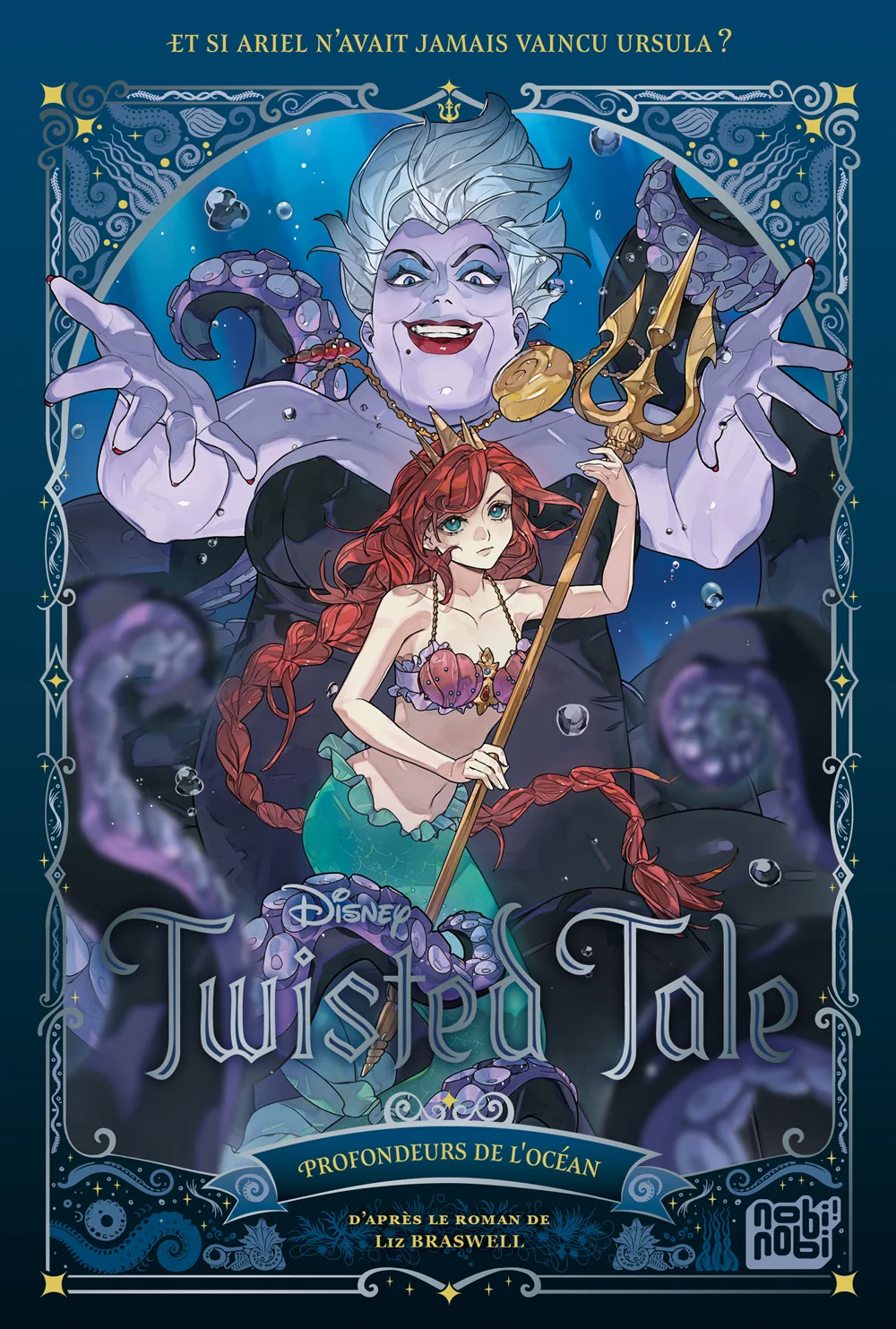

The Last Witch's Story: our review of Kira Ito's one-shot
A journalist travels the world to meet the last witches. Our review of Kira Ito's one-shot (Glénat): a gothic anthology, superb art, strong emotional weight, rated 8/10. Details, rights and visuals from the press kit.

Yubooh, la magie des songes Vol.1: our review of Paulina Palacios
A schoolgirl convinced her school hides a school of magic, dream-fish and a lot of gentleness. Our review of Paulina Palacios's first volume (Glénat), a full-colour Chilean global manga: superb art direction, an endearing world, rated 7.5/10.
French manga market review: Q3 2026
896 releases between July and September 2026, up 7.0% year on year: the market rebounds after the summer 2025 trough without reclaiming the 2024 peak. Meian surges and carries IDP / Anime Store to 22.1% of the market — more than one release in five.
The archive
2026
- Publisher focus Who dominates manga publishing in France? Anatomy of a concentration
- Quarterly reviews French manga market review: Q2 2026
- Annual reviews 2025, the year the market slowed without shrinking
- Decade reviews 2,074 series in ten years: how manga became an industry in France
- Quarterly reviews French manga market review: Q1 2026
No analysis in this category yet.
Counting is not understanding. A single figure says neither whether it is high, nor whether it is low, nor what it foretells.
Two regimes of evidence coexist here: the reviews are verified in the data; the interviews are verified in the quoted words and their recording — sourced differently, but sourced, and with the consent of the people interviewed.
The observatory publishes the raw data; this section offers a reading of it. The reviews appear at regular intervals, they compare each period with the same period of the previous year (the only comparison that means anything) and they are recomputed on every import: no figure is hard-coded here, so none can silently go out of date.
Everything rests on the open dataset under the CC BY 4.0 licence, verifiable and reproducible. When data is missing, it is shown as missing. When an error is found, it is corrected and told.
Explore it yourself
These analyses are just one reading among others. The dashboard and the full dataset are open: you can redo the calculations, and prove me wrong.