Reading hub · Action shōnen · ongoing
Choujin X
Great power, a great price to pay.
In 1998, the rise of superhuman beings called choujin reshaped the world into autonomous provinces. A plane crash upends the fate of young Ely and the everyday life of high schoolers Tokio Kurohara and Azuma Higashi. With Choujin X, Sui Ishida (Tokyo Ghoul) delivers a superhero manga for a new age, one that keeps pressing on where good, evil and the cost of power actually sit.
Full read of all 13 released volumes, updated with every new one.
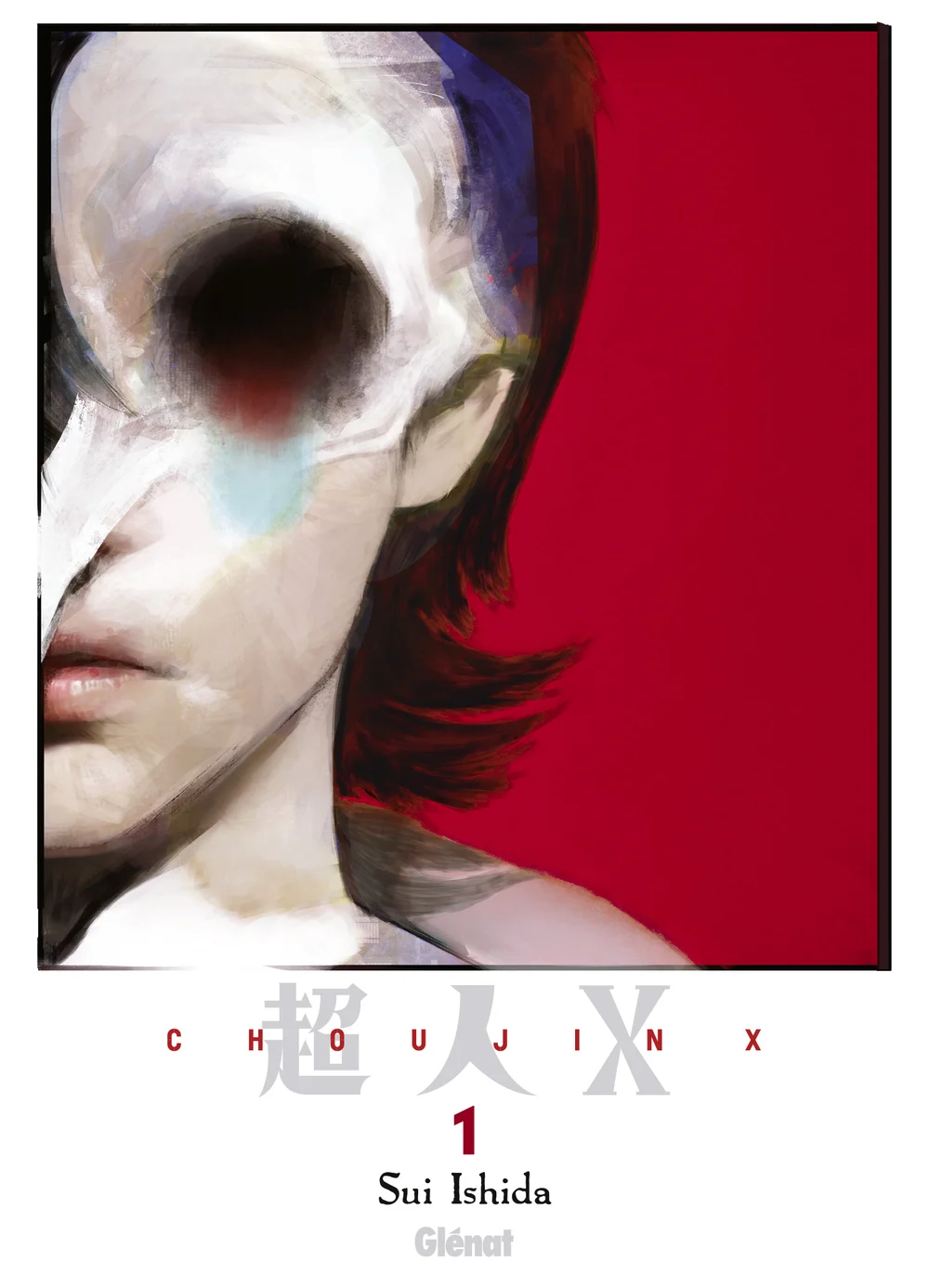
© 2021 Sui Ishida / SHUEISHA Inc. Édition française Glénat.
Choujin X follows Tokio Kurohara, an unremarkable high schooler turned choujin against his will, a regenerating superhuman like thousands of others infected since 1998. Around him, Ely Otta, a plane crash survivor recruited by force, and Azuma Higashi, the town's golden boy, are about to be swept up by power too. The three of them join Yamatomori, the institute that polices choujin, and get pulled into something much bigger: the hunt for Zora, a winged creature who claims to be Yamatomori's resurrected founder and foretells a coming catastrophe, the Black Scourge. Volume after volume, the series trades its shonen power fantasy for a war story about grief, where every ability comes with a human cost. Sui Ishida (Tokyo Ghoul) keeps asking who gets to judge and punish. And he makes stealing power, never killing, the story's real act of heroism.
Arcs 1 through 4 are set after a full read. Arc 5 is still a single volume and will grow as new ones come out.
Arc 1Becoming a choujinV1–V3
Vol. 1becoming a choujin, in Azuma's shadow7.5/10
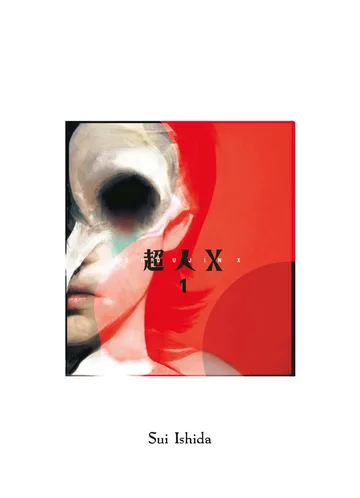
An origin with a twist: the town's “hero” is Azuma Higashi, the admired high-school vigilante. But when a thug he once beat up injects a mysterious serum and turns into a “soft-bodied” choujin, it is Tokio Kurohara, the unremarkable friend, who grabs the last syringe to save him. Tokio turns into a vulture-beaked choujin wreathed in smoke, and realises there is no going back.
Meanwhile, far from Yamato, farm girl Ely Otta survives the crash of a plane attacked by Chandra Hume, the “smoke choujin”, who contaminates her and hunts her to recruit her. The volume braids these two awakenings until they meet in a derelict zoo, where a snake examiner, Nari, puts Tokio to the test. It ends mid-fight, on a “full zoomorphosis”.
The pointThe shift of viewpoint works (the admiring friend, not the champion, inherits the power) and the melancholy of an imposed transformation lands well. The tonal editing is jolting and Ely's long chase chapter is confusing.
Vol. 2the zoo's end, then the baseball arc (Shiozaki)8/10
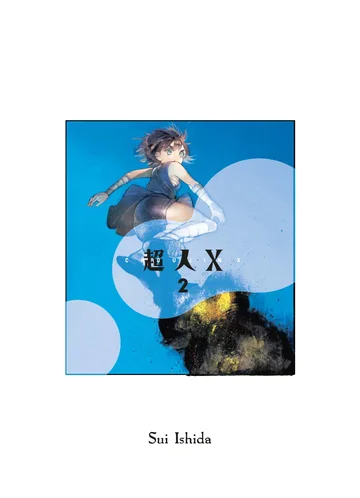
The zoo fight closes fast: keeper Simon Kagomura captures Nari, and Tokio and Ely end up at Yamatomori, the private institute that polices choujin, for a 40-day course. Hoshi Sundark asks the question that gnaws at Tokio all volume: what is there to gain from living, when you have no dream?
Most of the volume is a self-contained arc, “SINKER”: Tezuya Shiozaki, a former baseball ace turned choujin, is used by a gang to dig into bank vaults. Tokio brings him back not by force but with a baseball gesture. In the background, “A” syringes surface: someone is manufacturing choujin. Tokio finally names his goal: to become a choujin who can save others.
The pointThe volume leaves action quickly for a social, intimate story (the Shiozaki arc, a gift turning to a curse), sets its moral stakes cleanly and, above all, finally gives the hero a direction. A few muddled exposition passages.
Vol. 3Tokio's abduction, Azuma's turn8/10
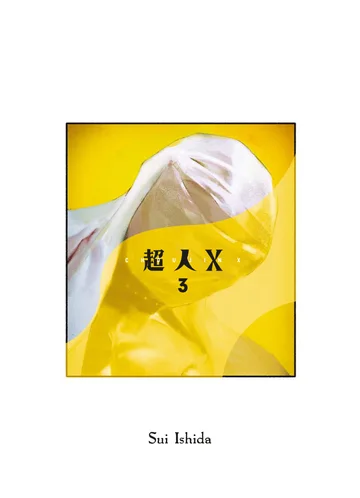
Ely settles in as a trainee keeper when a pair of mercenaries, paper-cut artist Ririka Umezawa and Ricardo Terror, is hired to capture Tokio. After an attack in the middle of a funfair, Tokio is abducted, turned to paper and held at the O'Neill motel. A heavy reveal: a Yamatomori keeper, Ichiro Sato, ordered the kidnapping.
Azuma, the friend who stayed human, goes alone to save him, is beaten to a pulp by Ririka, and throws himself off a building calling for wings: he becomes a choujin too. The volume ends on a cruel reversal: the hooded newcomer is Azuma, unrecognisable, pointing at Tokio and ordering “Fight me!”.
The pointA pivot volume that tips from school chronicle into drama, with memorable antagonists (Ririka and Ricardo) and a turn for Azuma that is both cathartic and unsettling: the last page flips friendship into threat. A passing villain's speech drags a little.
Arc 2Zora's prophecyV4–V6
Vol. 4origins and lore: keepers, “Raise”, the prophecy7.5/10
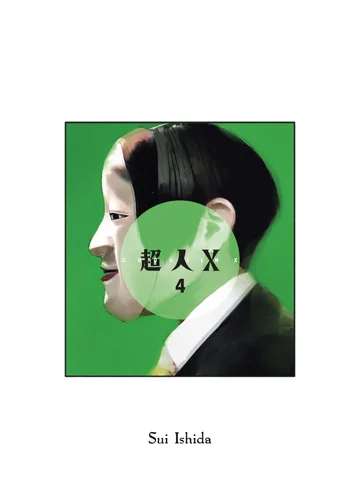
The volume opens on the Tokio/Azuma fight, then drops into a long flashback to the summer of 1998. It founds the series' mythology: the Yamatomori organisation, “Raise” (a destruction-regeneration that resurrects but erodes one's humanity), and the generational figure of an “X” able to destroy or save the world (Quim MacMan in 1923, the resurrected Sora Shiruha, founder of Yamatomori).
Tokio, Azuma and Ely apply as keepers and train on Kemonojima island, where each learns to name and control their power (Simon reveals his “borrowed swords”). A prophecy, the Kudan, foretells a superpowered choujin who will ravage Yamato; the leadership suspects Azuma. The volume ends with an enemy choujin, Yubiko, infiltrating the island and cornering him alone.
The pointA melancholy block of origins, carried by the Tokio-Azuma friendship, but the plot barely moves and the action, inside busy, atmospheric art, gets hard to follow in places. The lore makes up for it: the mythology laid down here will carry the series for several volumes.
Vol. 5the Kemonojima ambush, the beast's awakening, Zora7/10
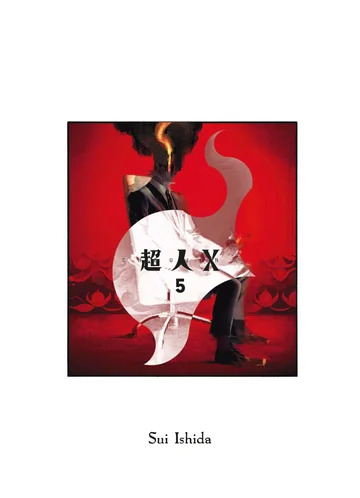
The keeper exam on the deserted island of Kemonojima turns into an ambush. A gang of choujin thugs has taken over the ruins for a “Black Show” and hunts Tokio down: Chandra Hume the smoker, Yubiko with her stretching mandala body, Hiroto Mori whose “voice of death” raises armies of skeletons, and the Chimera, who steals powers. Split up, the three trainees fight on three fronts. Weakened by the wound Azuma gave him, Tokio refuses to hand his “beast” over to Chandra and risks everything to save Ely.
Cornered, he finally lets his inner beast out in full: a monstrous vulture maw that swallows Chandra whole. But the real reveal is waiting at the top of a leaning tower lined with praying monks: Zora, a winged creature who claims to have fought long ago under the name Sora Shiruha, Yamatomori's own founder. A prophet of a coming catastrophe, the Black Scourge, she has turned the local thugs into her blood children and wants Tokio's beast to inherit her power to save Yamato. Tokio throws her hypocrisy back at her. She decides to force it on him instead.
The pointThe ambush piles on five antagonists we barely get to meet, the heavily inked fights lose readability, and Zora's long prophetic speech near the end drags the pace down. What saves the volume: Tokio's full beast awakening is a genuine moment of visual bravado, and the pact he seals with Ely, survive together, finally gives the character a real emotional compass.
Vol. 6Zora's battle ends, Tokio's past, Ely the “thief”7.5/10
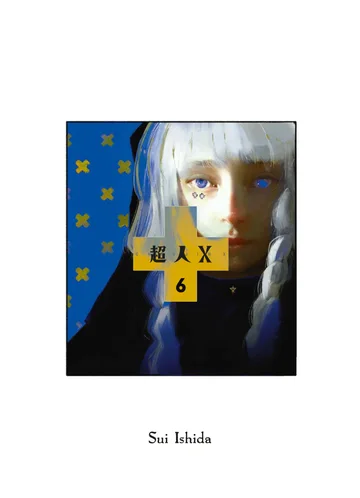
The tower standoff finds its resolution: after seven hours of fighting, Yamatomori's keepers, led by instructor Sundark Hoshi, push back Zora and her Tower choujin and pull Tokio, Ely and Azuma out. Broadcast everywhere, the battle fuels a wave of public hostility toward choujin. The volume then slows down for a long, intimate chapter: we learn about Tokio's past, a caring father who lets him drop out of school, and his decision to go train alone under Iwato, a no-nonsense master.
The final stretch jumps back to June 1999, aboard the plane whose crash, back in volume 1, had turned Ely into a choujin: Zora loyalists hijack it, and a mysterious “thief” confronts them before it goes down. The reveal lands right at the close: Ely Otta is that thief herself, the one who can absorb powers, and Zora now wants her dead. Chandra and the gel choujin I.C. Ice resurface in her wake.
The pointA quieter, transitional volume, more intimate than explosive: the chapter on Tokio's family is quietly beautiful, the series' thread about social rejection of choujin gets real weight, and the Ely reveal gives the plot new momentum. On the other side, the tower's big battle gets wrapped up in a handful of pages, and the cast of antagonists keeps swelling faster than it gets defined.
Arc 3The opium warV7–V9
Vol. 7back from Iwato, Zora's opium, infiltrating the Old Market7.5/10
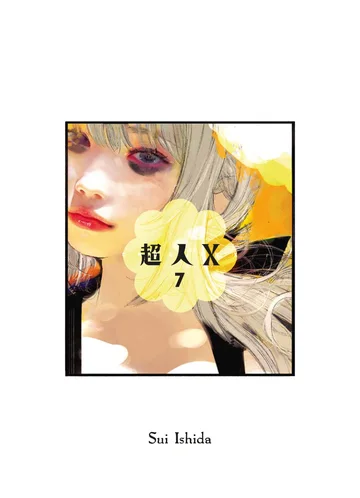
Back from Iwato, Tokio is immediately drafted into the anti-Zora task force assembled by Tsukiko Mado, Yamatomori's president. A painful flashback closes the book on Iwato: the tyrant Haken ruled there through terror, and the friends Tokio made there, Cristiano, Maureena and Pixotah, all died once the despot fell. More importantly, the volume unrolls the series' deepest lore yet: the 1924 choujin war, when Quim, Guelta's warlord, led an army of superhumans to conquer the continent. Because choujin regenerate but suffer terribly, Quim went looking in Yamato's poppy fields for the opium that eases the pain. Standing against him was Sora Shiruha, that is, Zora, a heroine to her people, who endured the same agony until she too sank into the drug. Hence Yamatomori's plan, the Old Market operation: trace the opium supply through the Southern City's biggest black market to cut Zora off and weaken her before the assault.
Tokio turns down a frontal assault and gets two weeks for a solo recon mission. He first maps out every faction on a huge investigation board: the Tower's choujin, how the power-stealing “chimeras” work, the trail of Sundark's brother. Then he flies over the Southern City in bird form and locates the Mourning Tower, torn over the idea of having to kill a fallen heroine. On the ground, backed by Michelangelo (an insect choujin) and the telepath Michael, he burrows into the Old Market, learns its slang, and unmasks two dealer choujin he takes down before releasing a tracker insect to follow the supply chain. The volume's darkest thread runs alongside it: Palma Shishinegura, the “choujin zombie maker”, a lonely embalmer who reanimates corpses as her own family. A dealer hands her the “Xember”, a drug that boosts choujin. Her favorite reanimated little body ends up becoming, for real, a choujin: a shapeless, many-eyed monster that devours her alive. The volume closes with Tokio discovering the creature.
The pointNot much frontal action here: the volume runs on its lore (the 1924 war, Zora's origin) and on a reframing that changes everything, yesterday's heroine is now just a junkie "who has to be put down", which cracks Tokio's resolve. Palma's horror vignette, meanwhile, is a small masterpiece of quiet cruelty. The flip side: the main plot barely moves, buried under historical exposition that takes up all the room.
Vol. 8the hyena, Batista's tragedy, Tokio & Azuma collide8/10
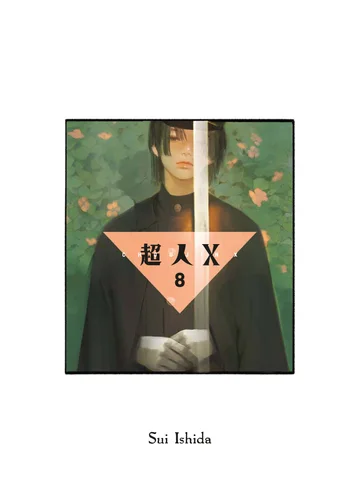
The volume opens on the resolution of volume 7's cliffhanger: inside a Southern City factory, Tokio faces “the hyena”, the small corpse Palma reanimated, now a real choujin who has slipped into a “chaos” state, a beast screaming for help. Joined by Azuma and Ely, he chooses to save it rather than kill it, but the creature keeps reviving the bodies it sprays with its blood, so they end up having to chain and finish it. Palma, recovered alive, is taken to Yamatomori, where her interrogation reveals a “pharmacist”, a choujin who manufactures the undead, and that the Xember also works on choujin. A flashback ties the knot on Batista Hoshi's tragedy, Sundark's brother: once an idealistic young man in love, he had given up his power to dodge a premonition from president Mado, one where Sundark would have to kill him, before still sinking into the Chimera's monstrosity.
The rest of the volume follows two threads in parallel: Tokio's Old Market investigation, which stalls (eleven days in, plenty of ridiculous choujin, no lead on the poppy fields), and the volume's strongest thread, the rift between Tokio and Azuma. Since the return from Iwato, Azuma hasn't gotten over his friend leaving without a word, surpassing him, and becoming a choujin. Ely pushes them to have it out. At night, under the dome from their childhood, Azuma finally spits out his bitterness and jealousy, “the fact that I can't beat you anymore”, then drops the admission that reshuffles everything: “I love Ely.” On the investigation side, tracing Palma's morphine leads to an anonymous dealer running a hidden site, “nude.cop”, whose boss goes by Nude. Tokio works his way back up to the Old Market and, as the volume closes, finally stands at the door of Nude, the elusive opium king.
The pointThe hyena's mercy killing and the Tokio-Azuma reconciliation, crowned by Azuma's confession, rank among the series' strongest scenes, and Batista's tragedy adds a real layer of grief to the Hoshi family. The weak spot sits elsewhere this time: the Old Market investigation spins its wheels, and the choujin gags (pure white skin, moss green, a tattooed dog) dilute the tension between two dramatic high points that otherwise land hard.
Vol. 9Nude's resurrection, Daizojima, the Antland genocide8.5/10
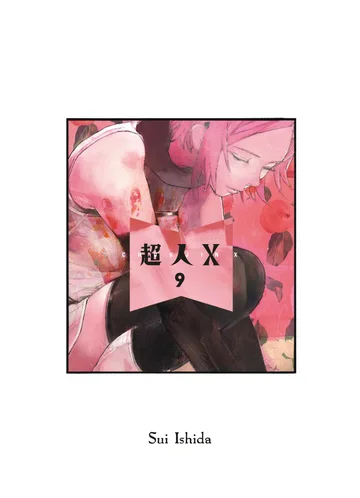
Picking up right on volume 8's cliffhanger, the volume opens on a twist: Nude, the opium king, is assassinated and carved up the instant Tokio reaches him. To trace the poppy fields, Yamatomori resorts to the unthinkable: having Palma Shishinegura bring Nude back, her “blood blessing” raising the dead as long as they keep getting regular transfusions, or they rot. The interrogation places Zora's plantations west of Yamato, on the island of Daizojima. Along the way (a slapstick train episode where Nude, a card-wielding choujin, briefly turns on his rescuers), Tokio also learns Palma's own origins: she is the last heir of Bill Morth, the immortal emperor of the “Island of Death”, whose shared blood turned immortality into a rotting curse and pushed its people to devour each other. Palma lost her entire family there. And during a night watch, Ely tells Tokio her secret: as the “thief”, she could steal Zora's power herself and spare him that burden.
On Daizojima, the sacred fields are guarded by stone golems and their mistress, Cabirol 16, a fanatic devoted to “Sora Shiruha, who fights for the people”. The fight turns into sacrifice: Nude burns himself out through his cards to dent the giants, and Tokio, cornered, injects a dose of Turbo Raiser, giving up all regeneration, to strike down Cabirol in beast form as “the messenger of death”. The last chapter then drops the darkest reveal in the series so far: through president Mado's memory, once a disciple of Sora, we learn that Zora, to head off a prophecy about a “mad king” (prince Antitis), once wiped out Antland and his entire bloodline, two hundred thousand dead, before announcing the premonition of the Black Scourge herself. Zora isn't just a fallen addict: she is a genocidal figure who became the very catastrophe she claimed to be preventing. The volume ends on a win (the burned fields leave Zora unable to regenerate, pushing the conflict into its final phase), Palma joining Yamatomori, and Tokio's birthday, while an unsettling English-language thread (“Mr. Hand”, “Imprint”) hints at a new threat.
The pointThe Daizojima arc stands entirely on its own; Ely's confession and Nude's sacrifice land without effort, and the Antland flashback recasts Zora as a tragic executioner, exactly the kind of paradox (stopping the apocalypse by committing it) Ishida likes to dig into. The art, from the poppy field to the golems, is spectacular. The one false note: the train chapter slides into pure gag, and the historical exposition, essential as it is, eventually becomes a slog.
Arc 4The siege of the Mourning TowerV10–V12
Vol. 10Christmas countdown, then the raid on Zora8/10
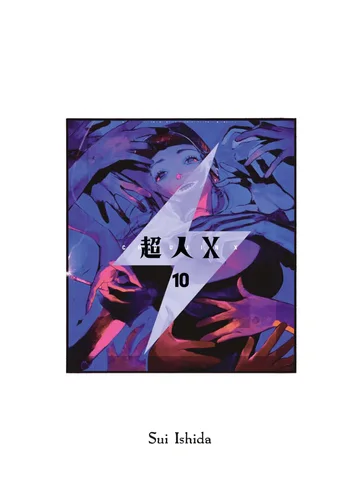
Four months after the poppy fields burn, a December 1999 flashback opens the volume: Yamatomori's council finally decides on the final assault against the Mourning Tower, but president Mado admits, for the first time, to having no premonition at all about the coming fight, after her visions have guided every move until now. Inside the Tower, Yubiko, the mandala-bodied choujin, is assassinated by a mysterious masked swordsman able to shut down regeneration. In counterpoint, a chilling flashback traces years of her slave and punching bag, finally broken free. On the antagonist side, elder Badro Brado, who once failed to inherit Sainte Mère's “mark”, secretly relaunches an experimental program (the “pharmacist”, the “Fragment” project) to graft a fragment of Zora's blood onto a host. The test turns into a civilian massacre (68 dead, 111 wounded) before he concludes that what he actually needs is “a Choujin X”: Tokio himself.
Most of the volume then turns intimate: the young keepers train (Palma joins them), new recruit Maiko shows up with a barely hidden crush on Tokio, everyone sits with pre-battle nerves ("I'm scared," Ely admits), and we revisit Azuma's birthday from a year earlier inside the Tower. The council sets D-Day for December 25, the Day of the Sacred Flame, with a special warning about Batista and Badro Brado. The final third tips into open war: a massive airborne assault on the Tower, with heavy losses from the moment of descent (over a hundred non-choujin dead), while the Tower reshapes itself to scatter Yamatomori's teams into four isolated groups cut off from each other. Tokio, separated with Maiko, pushes blindly through the structure toward Zora's throne, while the others (Ely, Azuma, Sundark, Simon, Michael) force their own ways in, each facing the Tower's living defenses.
The pointThe series leaves its hushed investigation behind for full-scale siege warfare, with an almost clerical sense of the body count (losses tracked like a scoreboard) that gives the conflict real weight. But the "mark" subplot and Badro Brado pile another layer of mythology onto an already crowded cast, to the point that a few threads get lost. Thankfully, the tenderness of the quiet scenes, Maiko, Azuma's birthday, holds its own against the brutality of the raid that closes the volume.
Vol. 11the raid scatters, four groups fighting alone8.5/10
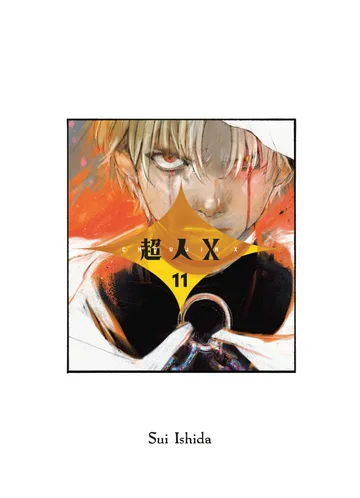
The raid from volume 10 continues across four fronts at once. Azuma's team (with BB, Tagawa and Denku) takes on Badro Brado, the “War Ogre”, a veteran of impossible endurance whose sticky blood regenerates endlessly. Azuma eventually brings him down with “Doom Bringer”, only for him to rise again from a simple pool of blood and nearly wipe out the whole team. Denku dies covering their retreat, on one last flashback of his lonely childhood. Tokio and Maiko, trapped in a dead-end room, face I.C. Ice again: Maiko defeats him at the cost of her own body, and the dying choujin reveals himself as one of “Zora's children”, his mother, a sailor killed by a mine left over from the Great War, having given him her blood to save his life. Ely, Simon, Michael and Michelangelo walk into an ambush by Jingu and Tawashi, also “Zora's children” saved from death by her power. Simon lets himself get captured on purpose to disable their barrier from the inside, and Ely knocks Tawashi out. Sundark and Arthur, meanwhile, restore the comms network and let the scattered groups find each other again.
The volume's most unsettling thread follows Sundark alone, heading for the throne: he crosses paths with a mysterious masked thief, a researcher willing to risk everything on “a one in a hundred chance”, who kills the throne's guardian, Knight Bottom, right in front of him before vanishing. The volume also drops a major reveal about Zora's mythology: many of her followers (Jingu, Tawashi, I.C. Ice) don't serve her out of simple loyalty. She has literally saved them from death by giving them her power: “if Mother dies, we die too”, which loads the assault with a whole new moral weight. The volume closes on the raid's other real win: the Old Market operation did weaken Zora, and the decisive battle for the Tower is now underway on every front.
The pointThe most relentlessly war-driven volume of the series so far: four fronts cutting between each other without ever losing the reader, a genuine feat of pacing. Denku's death and I.C. Ice's backstory hit exactly where they should, and what we learn about "Zora's children" usefully complicates the conflict's good-versus-evil framing. Still, it demands real effort to keep up with: too many simultaneous fights, too many powers to track at once (Rinbo, hematomorphosis, borrowed swords), and the masked thief from the throne room remains, for now, a pure mystery.
Vol. 12Badro Brado falls, the Chimera betrays Zora, a peaceful succession9/10
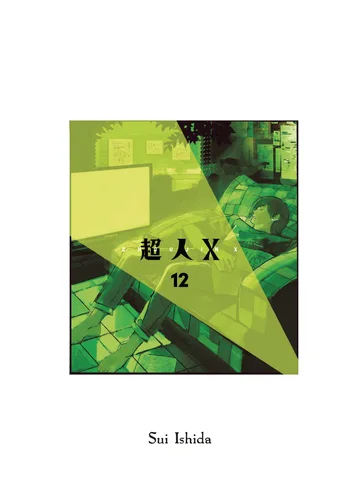
The volume finally hands over the key to the Badro Brado mystery: trapped in a mental void, he discovers he is nothing but a “flesh vessel”, a memoryless copy manufactured by Quim himself to prepare his own return after his 1924 defeat, each death simply a reset into a new, “amnesiac” body. This particular copy, now aware of its own absurdity, begs to finally be let go. Azuma, BB and a badly wounded but still-living Denku finish him off for good, at the cost of two lives, BB's and Tagawa's. Meanwhile, Ely tells the others the worst of the reveals: Tokio and Azuma both carry Zora's blood too, so her death could kill them as well. The survivors decide to keep going toward the throne anyway, now determined to spare Zora if they possibly can.
At the top, the assault gets beaten to the punch by an inside betrayal: the Chimera, the power thief, kills the chosen heir Batista Hoshi and tries to seize the “mark of the beast” herself. Zora strikes first. Exhausted and having just lost her candidate, she then does the unthinkable: instead of the final battle every prophecy promised, she opens a conversation with Tokio, who has come alone and unarmed, about good, evil and the future, then consciously hands him her mark so he can protect Yamato from the coming scourge in her place. But president Mado, appearing in a vision, rejects this peaceful succession outright and orders Zora's immediate execution. Tokio finds himself defending his enemy against his own side. The volume closes on an unexpected turn: Zora, without a fight, agrees to follow Tokio back to Yamatomori.
The pointThe high point of the series so far. What we learn about Badro Brado veers straight into science fiction, the Chimera's betrayal reignites the tension at the worst possible moment, and above all, the resolution of the Zora arc, started six volumes earlier, refuses the final showdown everyone expected in favor of a gesture of dialogue and succession that lands far harder. The deaths (Denku, BB, Tagawa) are given real emotional weight. One thing to brace for: flesh vessels, Zora's children, betrayal, succession, Mado's veto, it all comes so fast that a distracted read will lose a piece of it.
Arc 5The Chimera's revengeV13–
Vol. 13the Chimera rewrites the past, Hartley's tragedy, stealing the mark8.5/10
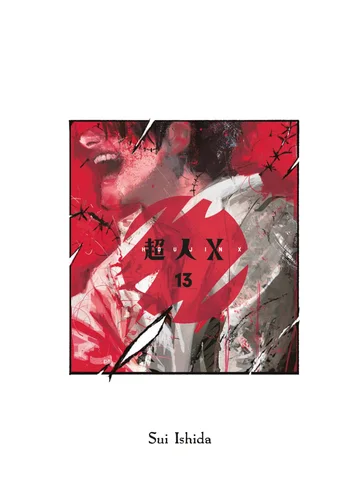
Right as Zora reaches for Tokio's hand to seal the peaceful succession, her wrist is severed: the Chimera, having just stolen Batista Hoshi's space-time power, seizes it and unleashes chaos, tearing reality itself open into “seams” that pull the fighters into other layers of time. Tokio and Ely, swept into one of them, watch helplessly as Batista's past gets rebuilt in front of them: under his human identity, “Hartley”, a researcher working on the Xember serum, he was starting a family with the woman he loved, before president Mado, fearing where his research and her own premonition were heading, stepped in to stop him. The couple still loses the unborn child, and the mother dies in labor. Shattered by that grief and convinced Yamatomori had “taken everything” from him, Hartley is approached by masked figures offering him a chance to become the Chimera's host, an ancient parasite that jumps from body to body looking for souls eaten away by despair, able to steal any power and, in theory, rewrite time itself to bring the dead back.
Pulled back to the present through a tear opened by Zora's surviving spirit, Tokio, Ely, Sundark and the others face down Batista, now the Chimera, bent on erasing the past that took everything from him. Sundark, his own brother, forces himself to fight him head-on rather than try to bring him back, only to find an opponent who can undo any hit and “rewind” the fight at will. Unable to beat him by force, the group chooses a completely different approach: instead of killing him, Ely, the “thief”, has to steal his power to cut off the source of his reconstruction. At enormous cost, in the middle of a storm of blows, she manages to drain Batista's stolen power and, for now, ends the threat.
The pointThe series' most ambitious volume: by digging into the Chimera's origin through Hartley and Batista's grief, Ishida closes a thread stretched since volume 8 and finally gives a tragic, not just monstrous, face to its most elusive antagonist. Rewriting the past as a plot device is a reckless move, but it holds together on the strength of the intimate drama it serves. And the final fight, where Ely chooses to strip Batista of his power instead of finishing him off, closes a loop opened all the way back in volume 1. What's left hanging: this ending, the latest volume released so far, resolves the immediate crisis without closing the larger arc. Yamato, Zora and the fate of the world all remain unresolved.
Strengths
- A mythology that unfolds in layers without ever repeating itself (the 1924 war, Zora's “children”, the Chimera)
- A roster of antagonists rarely reduced to mere obstacles: Zora, Batista and Palma are all victims before they're threats
- Artwork that never lets up, from the flying sequences to the Tower's biggest battles
- A moral stance held all the way through: stealing power instead of killing is framed as the real victory
Weaknesses
- The pace gets heavier from volume 7 on: factions, lore and side characters pile up fast, sometimes faster than they're drawn
- A few passing antagonists (the Old Market, the train chapter) stay underused next to the rest of the cast
- The series is still ongoing: the Yamato/Zora/Black Scourge arc isn't closed by volume 13
The verdict
Hard to guess, at volume 1, that this story about a high schooler turned choujin would end up digging into a century-old genocide, the origin of a parasitic entity, and whether it's ever right to kill even those who destroyed everything. Choujin X asks for memory (the cast keeps growing) and patience through its most lore-heavy stretches, but the series' moral backbone, never making death the answer, earns the effort. At this point, it's one of the strongest ongoing series in Glénat's catalogue.
| Original title | Choujin X (超人X) · French edition by Glénat |
|---|---|
| Author | Sui Ishida (Tokyo Ghoul) |
| Publisher | Glénat · Shonen line |
| Serialization | Shueisha, Young Jump / Manga Plus |
| Status | Ongoing series |
| Format | 13 × 18 cm · ~262 pp. · €7.90 |
| Volumes | 13 released (up to V13) |
| Reading direction | right to left |
| ISBN | T1 978-2-344-05510-6 · T2 978-2-344-05511-3 · T3 978-2-344-05693-6 · T4 978-2-344-05850-3 · T5 978-2-344-05951-7 · T6 978-2-344-06166-4 · T7 978-2-344-06374-3 · T8 978-2-344-06559-4 · T9 978-2-344-06680-5 · T10 978-2-344-06835-9 · T11 978-2-344-07019-2 · T12 978-2-344-07223-3 · T13 978-2-344-07484-8 |
| Score by volume | V1 7.5 · V2 8 · V3 8 · V4 7.5 · V5 7 · V6 7.5 · V7 7.5 · V8 8 · V9 8.5 · V10 8 · V11 8.5 · V12 9 · V13 8.5 |
How we read it. This piece is based on a complete, page-by-page reading of all 13 volumes released so far (French edition by Glénat). The per-volume scores, summaries and quotations all rest on that full reading; lines are quoted as closely as possible to the text.
Credits & rights. © 2021 Sui Ishida / SHUEISHA Inc. French edition by Glénat. Visuals from the work, reproduced for review purposes.