Reading hub · Slice of life
Promenons-nous dans l'espace
Looking up at the sky makes you feel tiny.
Kobayashi, a high schooler who looks like a petty thug, fails at every part-time job without being able to say why. Uno, his classmate who is fascinated by space, keeps a notebook of rules he calls his 'safety tether', like the line that connects an astronaut to the ship. Two ways of being 'a little off' that teach each other. A gentle, funny chronicle about neurodivergence and friendship. We read all four volumes released so far.
Hub published on .
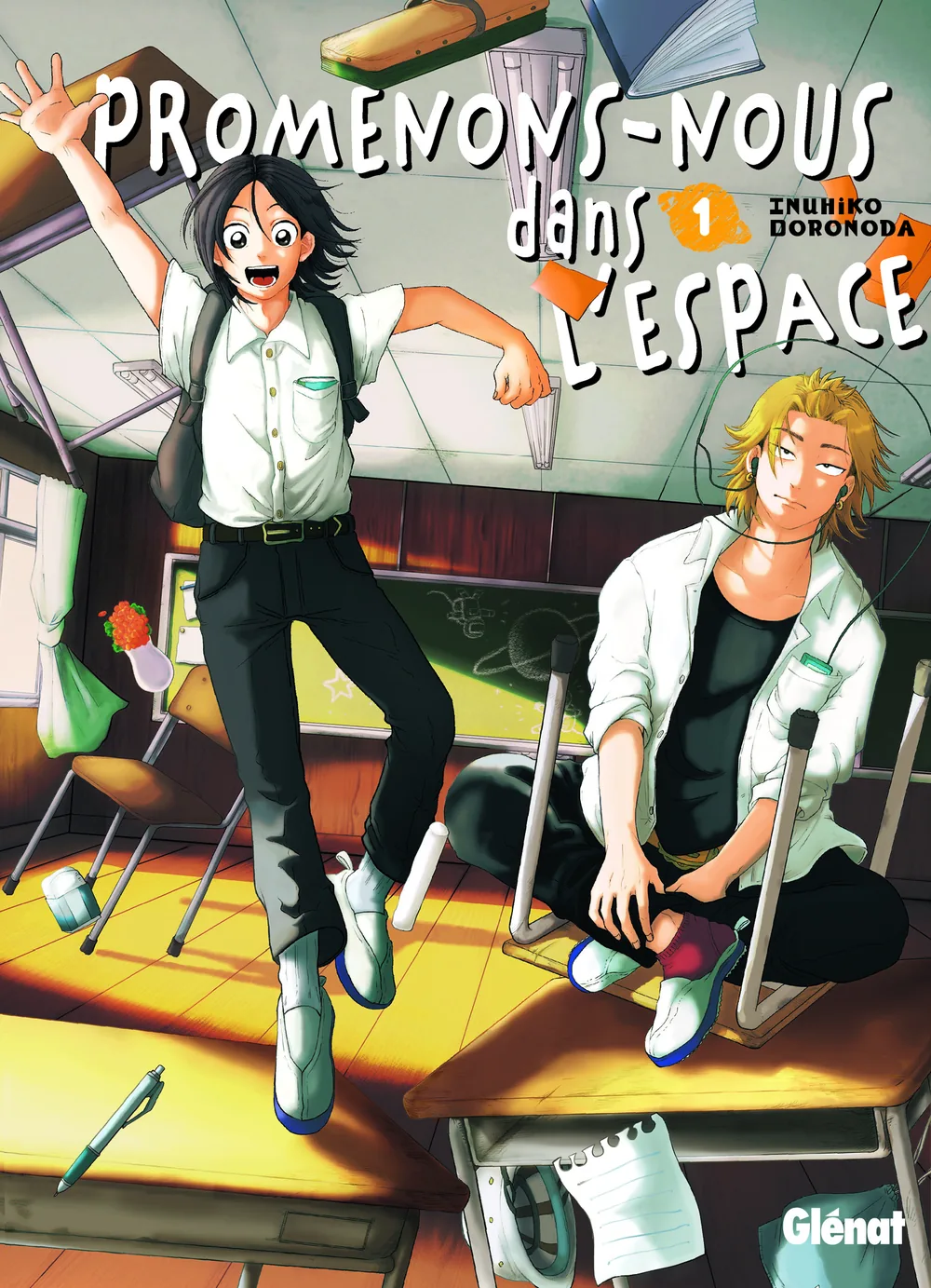
© Inuhiko Doronoda / Kodansha Ltd. French edition Glénat. Visual from the book.
Two high schoolers with nothing in common: a 'thug' who doesn't know himself and a space enthusiast whose mind works differently, who find they're on the same wavelength. Promenons-nous dans l'espace is a tender slice of life about inclusion and neurodivergence, threaded by one image: moving through life the way you walk in space, disoriented but held by a 'safety tether'. (A nod to the French nursery rhyme 'Promenons-nous dans les bois'.)
Thread 1 · How the story unfolds
Not a plot that advances, but a bond that deepens. Each volume lights up a new facet (Uno's anxiety and self-regulation, the notebook method Kobayashi borrows from him, the overprotective sister) around a single idea: what you think is 'easy' isn't easy for everyone, and each of us moves forward tethered to others.
Thread 2 · Is it worth continuing?
Yes. It's one of the most truthful slice-of-life series out there (Grand Prix, Manga Awards 2024). It deepens volume by volume without forcing the emotion. Best if you love slow, contemplative storytelling, not a tense plot.
Who's it for?
- You love contemplative slice of life, close to 'Insomniacs after School'.
- Neuroatypical, sensitive characters move you.
- Astronomical wonder and Japanese indie music culture speak to you.
Not for you if…
- You need action or a tense plot.
- You're looking for a clear-cut romance.
- Very introspective, low-stakes pages put you off.
An episodic, compartmentalized series that renews itself by opening up new characters and new wounds around a single foundation. You don't come to it to find out 'what's going to happen', but to spend time with these people.
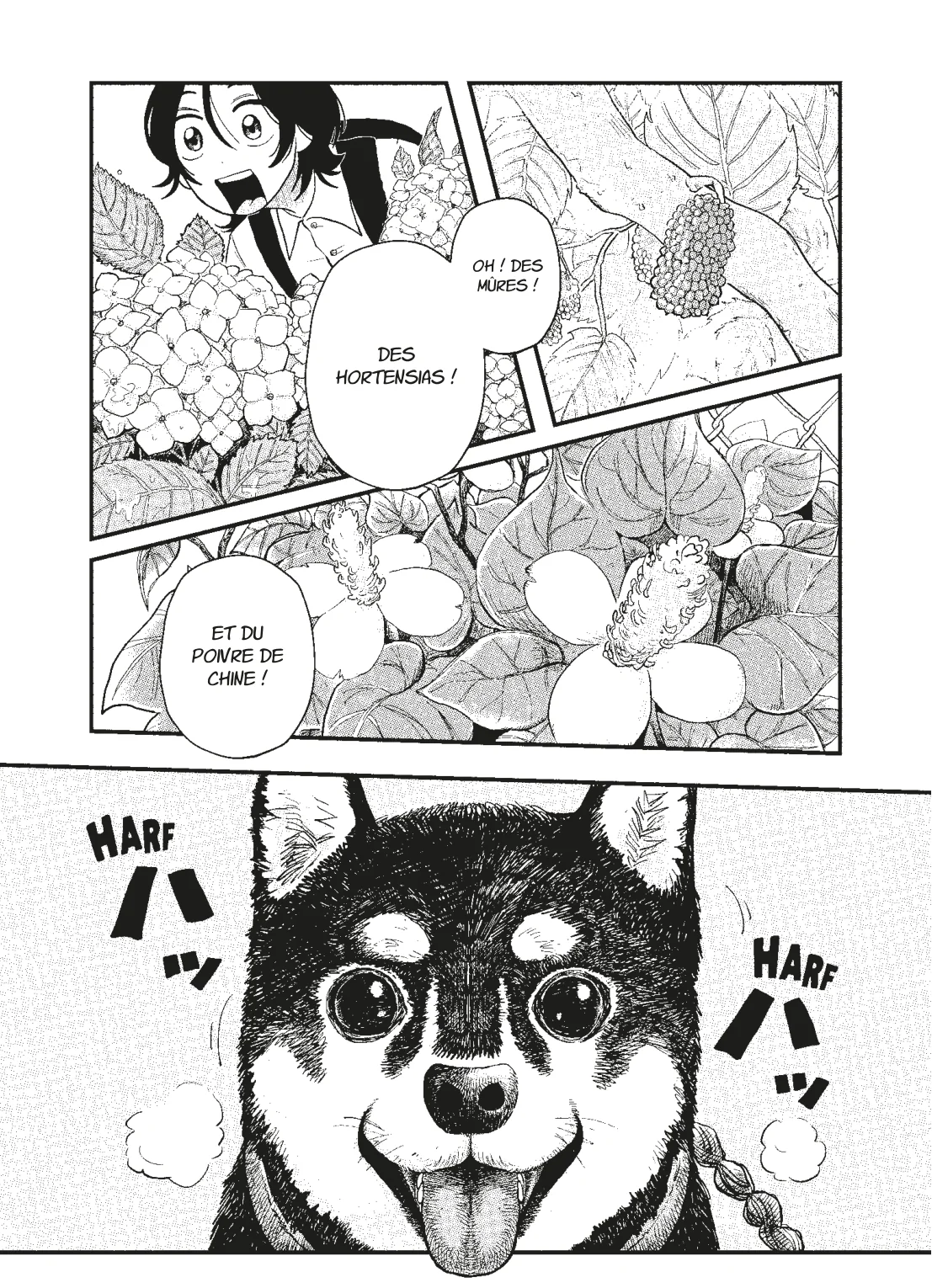
The duo is set up. Kobayashi, emotional and on edge, fails his part-time jobs and nearly throws in the towel (one scene shows him in tears). Uno introduces himself in an endless single-speech-bubble monologue (birthday June 20, favorite planet Saturn) and carries a notebook of life rules. He explains the heart of the title: faced with the unexpected, he feels 'lost in space', and his notebook is his 'safety tether', like an astronaut's line. Kobayashi recognizes himself in it and starts keeping a notebook too.
Around them, an astronomy club comes together, with its gentle president Mikawa, whom one chapter reveals in quiet distress. Daily life hinges on small wonders (the Moon, a barking shiba) and on a repeated thesis: what you take for a 'mere dot' in the sky is in fact immense. The stakes aren't narrative but human.
The takeawayA gentle opening that sets everything in voice and gaze. Beneath the comedy, a delicacy about difference.
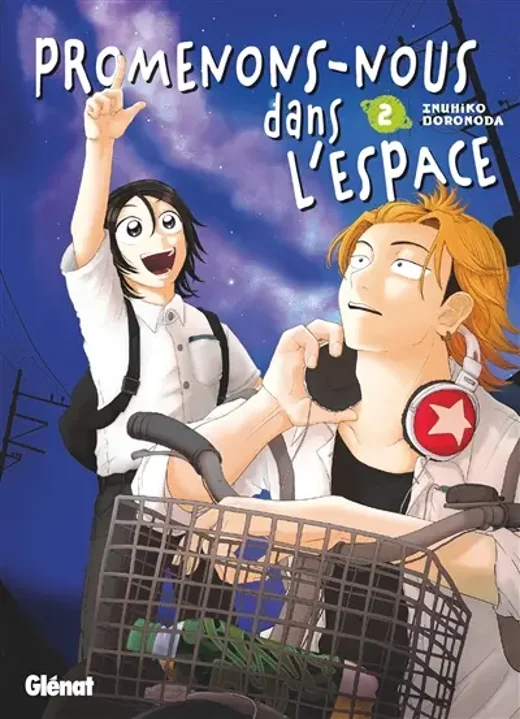
The volume turns friendship into an engine of mutual change. Kobayashi wants to pass his make-up exams to join the club's summer activities, and is tutored by Yamada, a former recluse. Above all, he confronts his own struggle: being unable to say 'why' he gets things wrong, and hating himself for it. The cliff scene ('like I'm about to fall off a cliff… and someone comes and asks me why?') is one of the most accurate depictions of executive-function distress in manga.
In mirror, Uno has a sensory overload and judges himself 'pathetic' for tiring so quickly around others. Mr. Inoue lays out the book's philosophy: 'we're all more or less strong and more or less sociable', and withdrawing is nothing to be ashamed of. Each thinks the other 'can do anything' while both are struggling. A bittersweet ending: Kobayashi improves, but still fails.
The takeawayThe book reveals its real subject: Kobayashi is atypical too. A study of difference in mirror, funny and moving.
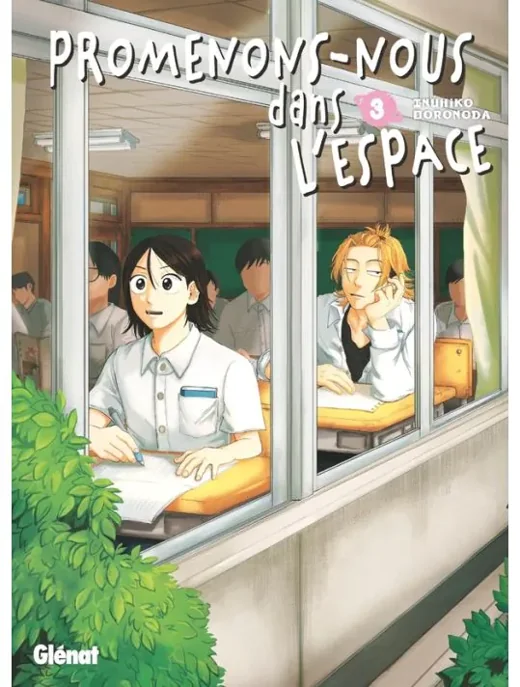
A single arc (the club's summer outing to the planetarium) told in turn by Mikawa, Uno, Kobayashi, then Uno's sister Satsuki. Mikawa works up the nerve to tell Kobayashi he loves his humor; Uno, thrown by a last-minute change, learns an outlet for his anger: squeezing Kobayashi's hand with all his might rather than hitting himself.
The high point: before the immensity of the galaxy, Kobayashi feels dizzy and blurts out 'why do we even exist?'; Mr. Inoue answers that life may have no meaning at all, and that this is just fine: meaning is built by unearthing, one by one, the things that delight us. The last chapter shifts to the Uno household: a summer festival where the overprotective Satsuki orders her brother to stay away from Kobayashi, and where Keisuke, for the first time, asserts his anger.
The takeawayA finely controlled rotating-POV structure (the outlet sown at the planetarium, reaped at the festival). The sky as both vertigo and comfort.
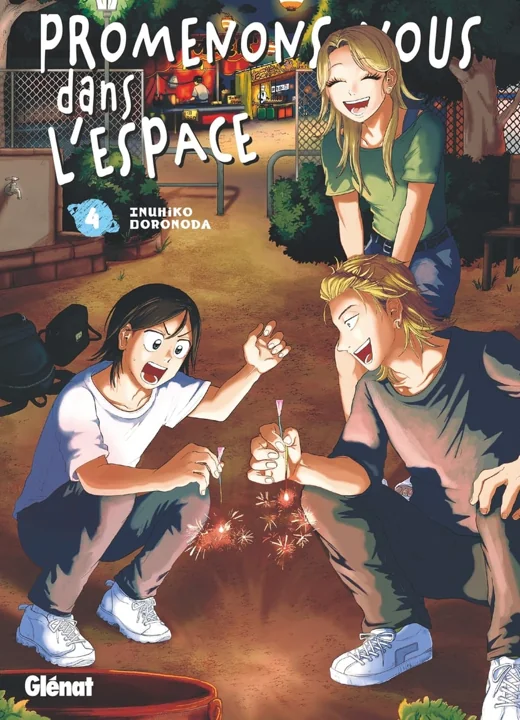
The volume sheds light on Satsuki: as a child she defended her mocked little brother and turned 'gyaru' like armor. In the present, she finally understands (seeing the photo of Uno's notebook on Kobayashi's phone) that her brother doesn't inspire pity but transforms others: it was his method that saved Kobayashi at work.
The big set piece: the school sports day (acrobatic gymnastics, the relay). Kobayashi, an instinctive athlete, learns that 'what's easy for me isn't easy for you' and gets 'translated' by the non-athletic Muraï; they plan earplugs for the starting pistol that terrifies Uno. The relay finishes next-to-last, in sheer joy. Warmth, reciprocity, and a point about accessibility that never weighs the story down.
The takeawayThe heart of the project: inclusion as a mutual affair. The bonus strips on Uno's special interests are among the most truthful pages about autism in manga.
« We're all more or less strong, and more or less sociable. »Promenons-nous dans l'espace, vol. 2
Contemplative and choral, the series moves by deepening rather than by plot: new viewpoints (Mikawa, Satsuki), new facets of difference, but always the same gentleness and the same truthfulness. The author announces a volume 5. You don't come for a cliffhanger, but for the warmth.
Strengths
- A deadpan, tender, and often genuinely funny tone.
- Unusual characters handled with precision (anxiety, hypersensitivity).
- Beautiful silent, atmospheric panels, the sky rendered in screentones.
- A volume 4 that delivers a genuine emotional peak (the relay).
Weaknesses
- Almost no plot: everything rests on mood.
- The compartmentalized structure can feel diffuse, with no forward engine.
- A lot of interior text, very talky pages.
- Four volumes in the same gentle register: little variation in tone.
The verdict
One of the most truthful slice-of-life series around: a friendship between two 'off-kilter' high schoolers who teach each other, with tender humor and a delicacy about neurodivergence. No tense plot, but real depth and earned emotion. Award-winning in Japan (Grand Prix, Manga Awards 2024), and you can see why.
| Original title | Inuhiko Doronoda — édition française Glénat |
|---|---|
| Author | Inuhiko Doronoda |
| Publisher | Glénat |
| Volumes read | Volumes 1 to 4 |
| Reading direction | right to left |
| ISBN | Vol. 1 978-2-344-06610-2 · Vol. 2 978-2-344-06710-9 · Vol. 3 978-2-344-07224-0 · Vol. 4 978-2-344-07225-7 |
| Score by volume | V1 · 8.5/10 · V2 · 8.5/10 · V3 · 8.5/10 · V4 · 8.5/10 |
| Average score | 8.5 / 10 |

À lire ensuite
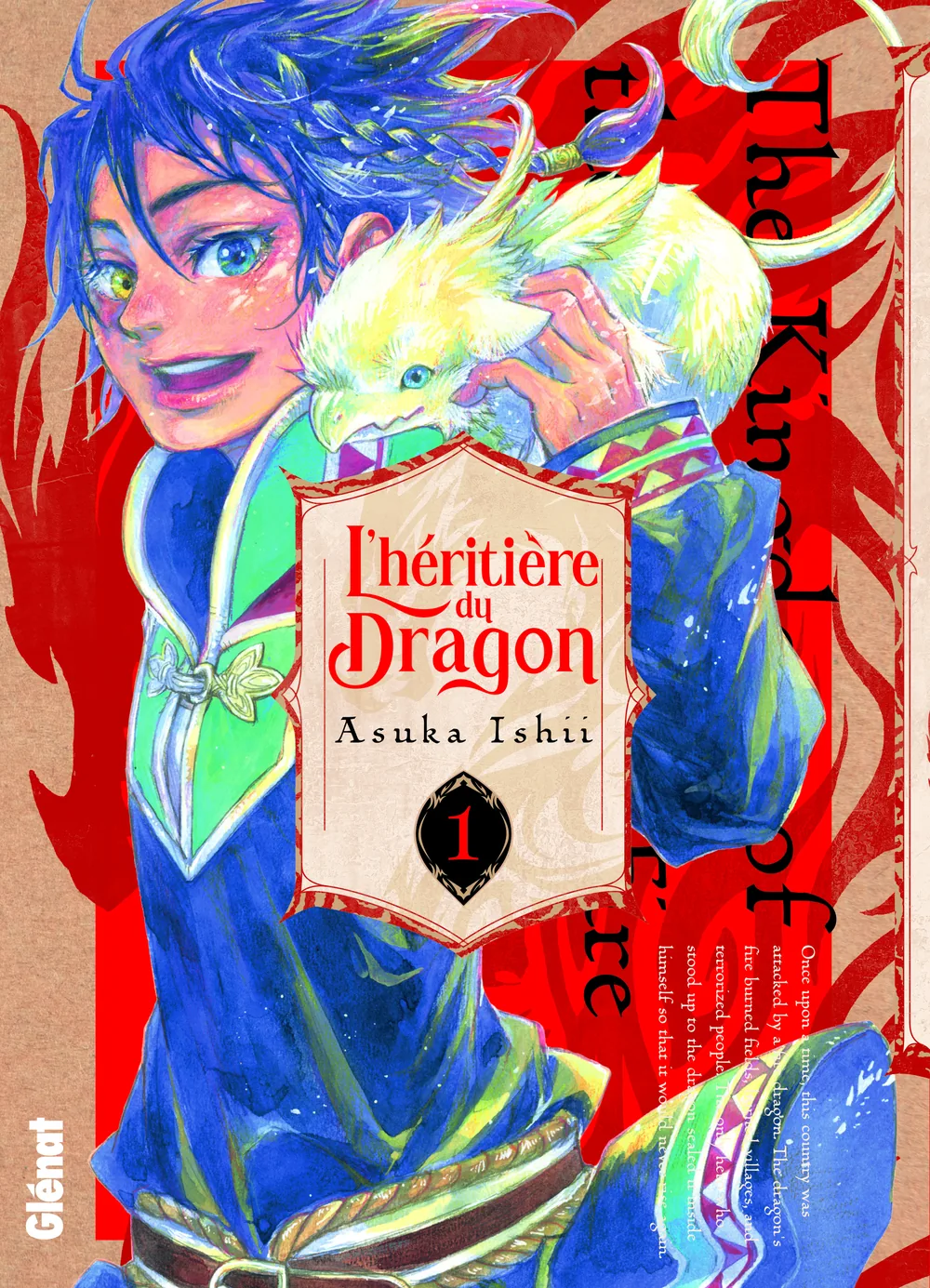 Reading hub · Seinen dark fantasyL'Héritière du Dragon
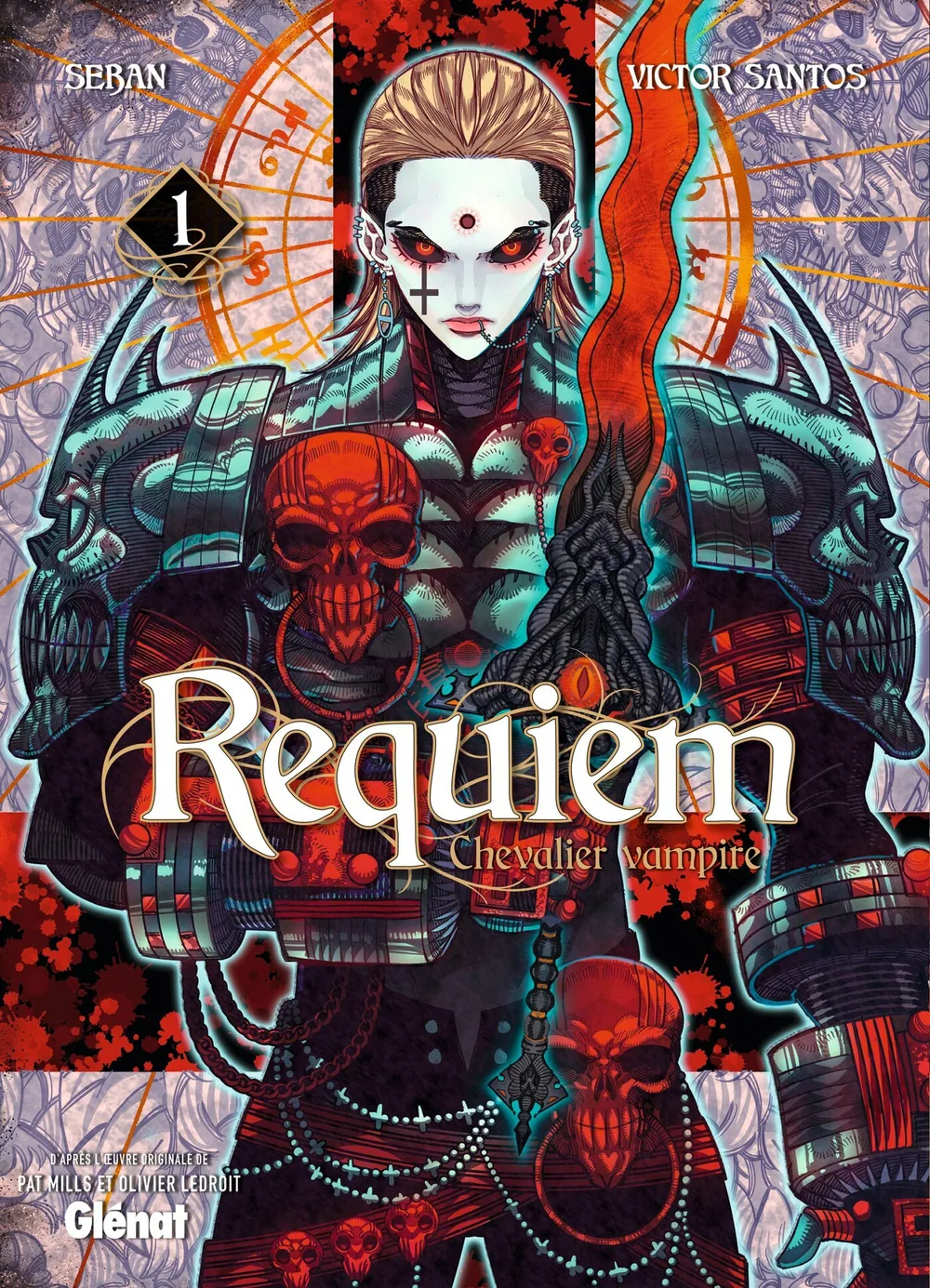 Reading hub · Gothic fantasyRequiem, Chevalier Vampire
 Reading hub · Action shōnenThe Regalia of the Underdog
How we read it. This piece is based on a complete, page-by-page reading of the four volumes released in French (Glénat edition). The per-volume scores, summaries and quotations all rest on that full reading; lines are quoted as closely as possible to the text.
Credits & rights. © Inuhiko Doronoda / Kodansha Ltd. French edition Glénat. Visuals taken from the work, reproduced for the purpose of review. The work may not be reproduced without permission. Reproduction and text-and-data mining for AI training purposes are prohibited without authorization (art. 4(3) EU dir. 2019/790).