Reading hub · Seinen
Centaures
A people treated like game.
In an ancient Japan, centaurs (half-human, half-horse creatures, intelligent and cultured) are hunted by humans, who capture them, mutilate them and break them in as war mounts. The series follows Matsukaze and young Kohibari, then the next generation, then the origins. A slow, melancholy survival drama. We read all six volumes.
Hub published on .
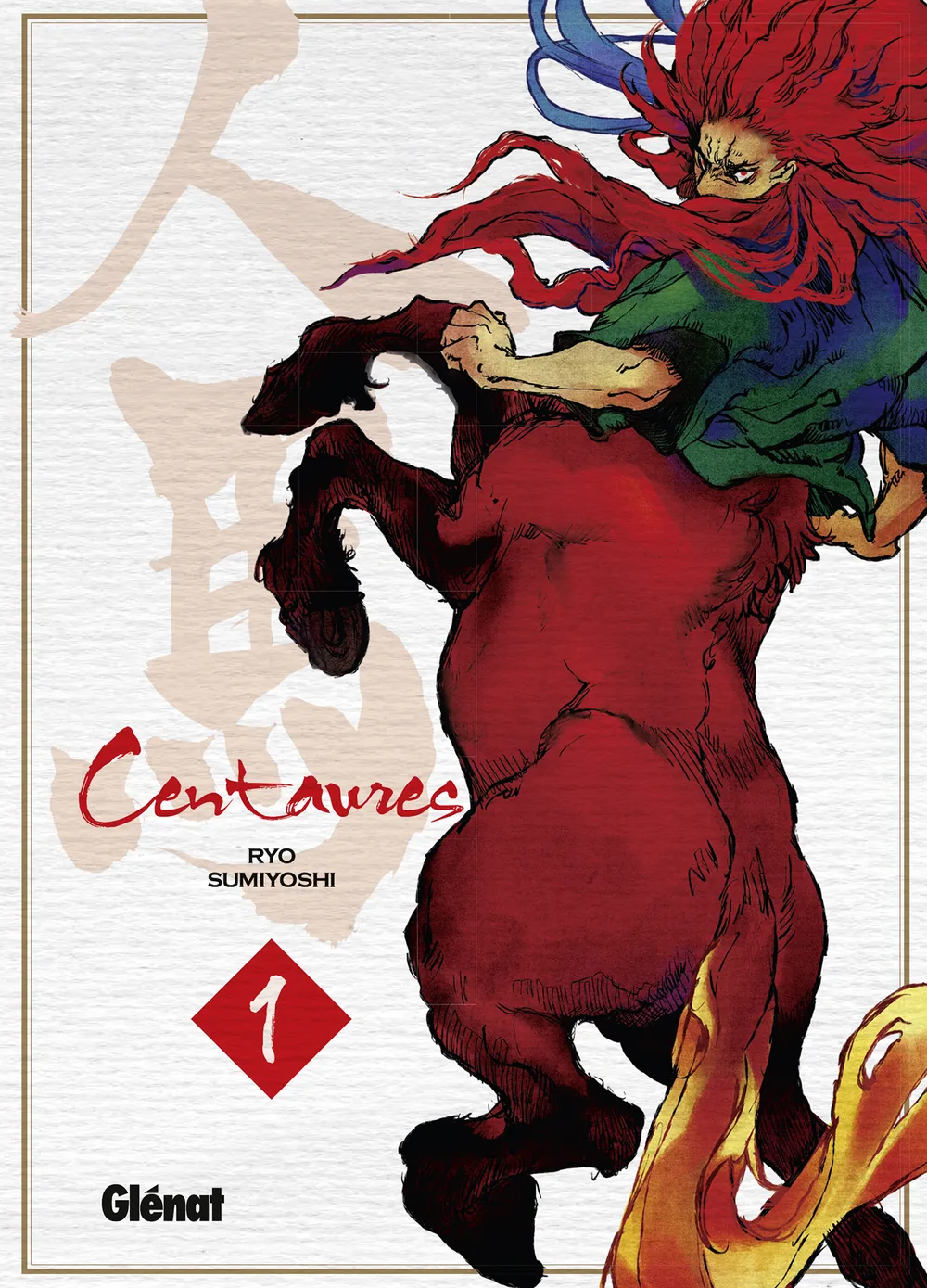
© Ryo Sumiyoshi / French edition by Glénat. Visual from the book.
A people of cultured centaurs, treated like game by humans. Centaures is a grave, contemplative seinen survival drama, almost ethnographic in the way it depicts a persecuted civilization, and shot through with brief bursts of brutal violence.
Thread 1 · How the story unfolds
Not a shonen-style escalation of power, but a fresco in three movements: the story of Matsukaze and Kohibari (volumes 1–2), the next generation and coexistence with humans (volumes 3–4), then the origins that loop back to the beginning (volumes 5–6).
Thread 2 · Is it worth it?
Yes, but not in the way you would expect. The peaks are graphic and thematic (the price of a life, protecting the young, refusing vengeance), not spectacular. It is slow and contemplative: save it for those who enjoy that.
Who's it for?
- You enjoy atmospheric, near-ethnographic seinen.
- Melancholy survival dramas and beautifully drawn nature speak to you.
- You welcome adult themes: persecution, grief, the exploitation of a captive people.
Not for you if…
- You want a fast-moving plot or a single hero with a clear arc.
- You want light action or escapism.
- You read young: there are massacres and undertones of abuse.
Six volumes in three movements: the story of Matsukaze and Kohibari (volumes 1–2), the next generation that seeks to live with humans (volumes 3–4), then the origins, which explain everything and loop back to the beginning (volumes 5–6). Not a single propulsive plot, but a fresco.
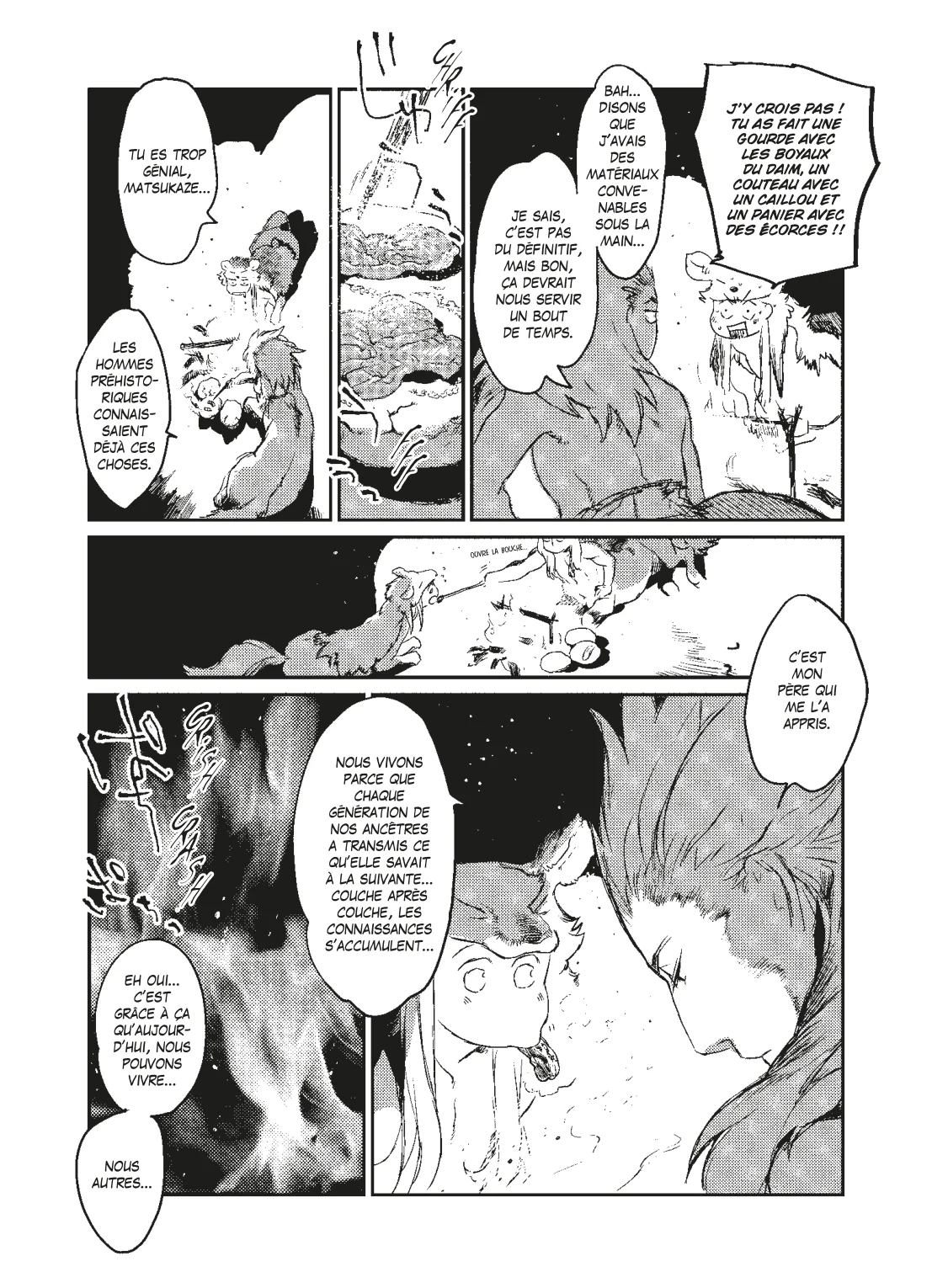
In a feudal Japan, the centaurs (men's torsos, horses' bodies, a cultured people) are hunted by humans: captured, their arms amputated so they can be broken in, sold on as war mounts. The most feared of them, a russet-maned male whom humans call "Iwatora, the Red Tiger," lets himself be caught to cover the escape of his son Gonta. In captivity he meets Kohibari, a centaur born a slave, amputated as a child and used as bait.
His real name is Matsukaze. The two escape and survive together in the mountains; Kohibari, who has never known freedom, learns everything from him. They reach a hidden community where Matsukaze's sister Koume lives. The volume closes on the hunters' attack. An elegiac, naturalistic tone, shot through with raw violence.
The takeawayA strong way in: an original concept, a dense world, and an identity trap (who is captive, who is wild?) that the brushwork makes sublime.
The humans' assault on the community turns into a siege. We learn the horror of Mikuni, who saw men devour her parents and then fed on human flesh out of revenge, before Matsukaze turned her away from it. Hayame, the enemy archer, is captured, then won over to the children's cause.
To save the orphans, Matsukaze sacrifices himself: he lures the army to the bottom of a rain-soaked ravine and brings it down on them. Before he dies, he hands on his charge: "Live. Pass it on." A thirty-year ellipsis then opens the future, and a new generation, Tanikaze, who dreams of seeing the world.
The takeawayThe heart of the series: protecting the youngest, the price of every life. Matsukaze's sacrifice takes on a generational meaning, not a martial one.
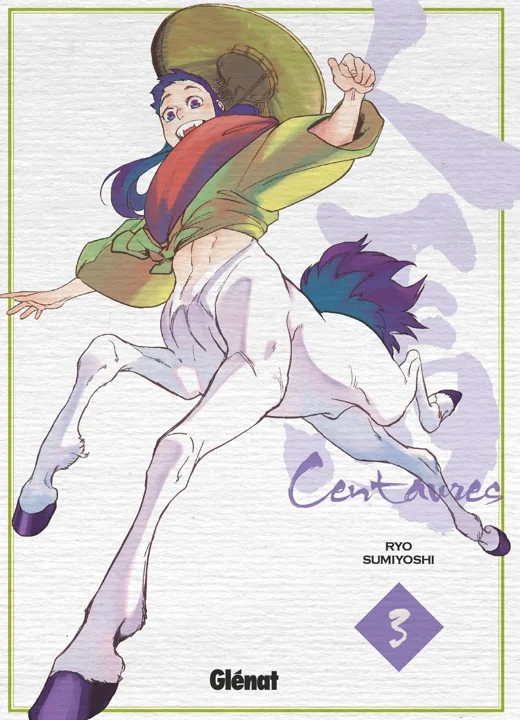
Thirty years have passed. Tanikaze comes down from the mountain to "see the humans," escorted by Gonta (now a one-eyed adult, marked by the war) and Mikuni. Each character carries a trauma that recasts the others, up to the knot of it: it was Matsukaze who, long ago, turned Mikuni away from revenge and cannibalism.
The group meets Shagozen, a centauress widowed from a human, who is building a place of coexistence. The volume squarely poses the series' question: after the genocide, can you live alongside those who hunted you? The answer is built over the long run, through work and the refusal of revenge.
The takeawayA luminous choral turn: several voices answering one another on "what are humans?" A rare emotional density.
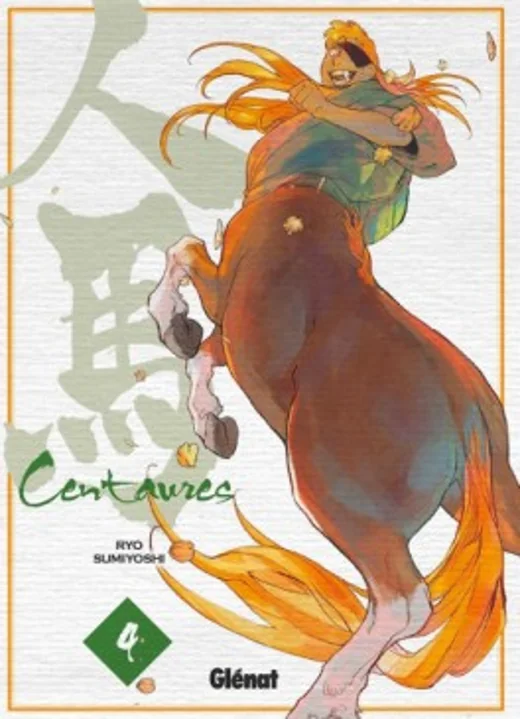
Gonta, Mikuni and Konoha (a centauress raised by humans) work at floating timber and building a sanctuary in memory of the dead. The humans are no longer executioners but craftsmen, mentors, adoptive families. Tanikaze becomes a basket-weaver's apprentice and reaches for the beautiful, not just the useful.
The ridge-beam ceremony turns to drama: the waterlogged ground gives way, Tanikaze is buried and loses a leg. Two couples form all the same. Gonta and Konoha head back to the mountains; Tanikaze and the dancer Shirayuki stay and dream of travelling the world, "with my leg that links humans and centaurs." A quieted coda: "life goes on."
The takeawayInclusion as a two-way matter, held in check by a tragic counterpoint (the collapse, the amputation). Never saccharine.
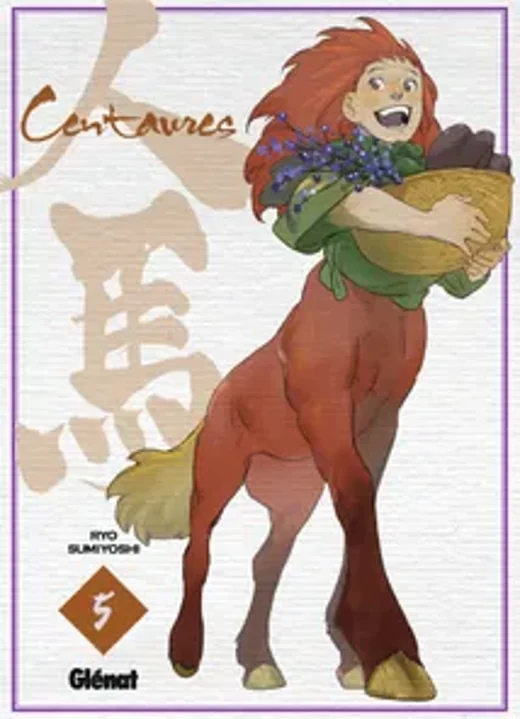
The volume is a full flashback: Matsukaze's childhood, before he became "Iwatora." His family (the father Aguri, a herd chief, the mother Asahi, the brother Mochizuki, the little sister Koume), the centaur cosmology of "the ring of life," a perinatal bereavement, learning to survive, and the human threat drawing closer.
Everything tips over in an ambush: his father Aguri is riddled with spears to set him free and, dying, passes on the charge of protecting his own. "For the first time in my life, I saw mother cry." The source of the trauma that will make him a legend.
The takeawayAn intimate tragedy of great control: the teaching idyll makes the father's death, sober and without pathos, all the more powerful.
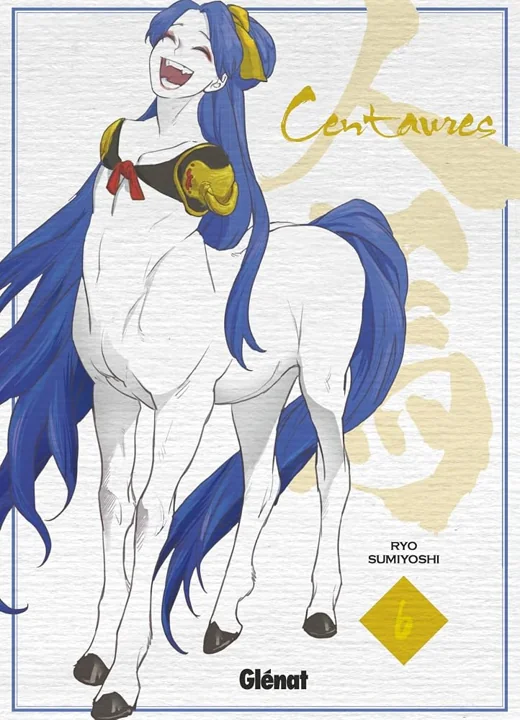
The final volume, entirely retrospective. Two parallel biographies: Matsukaze, who through grief and revenge becomes "Iwatora, the Red Tiger" and spreads terror among the humans; and Kohibari, born free, his arms amputated at six, raised as a pet slave, despised by his own kind whom he serves as bait, with a kindly human groom as his only bond.
The two trajectories meet exactly at the moment they first cross: the starting point of volume 1. The loop closes on the book's thesis, "life is nothing but a matter of bonds." "Centaures – The End."
The takeawayA bold conclusion: instead of an action climax, an origin story that recasts the whole series and closes the loop with remarkable economy.
« Live. Use what you have learned. Pass it on. »Centaures, vol. 2
This is not a shonen escalation of power, but a fresco that unfolds. The story of Matsukaze and Kohibari (volumes 1–2); thirty years later, Tanikaze's generation learning to live with humans (volumes 3–4); finally the origins (volumes 5–6), which close the loop on the first encounter in volume 1. The series is complete. Its peaks are the large wordless pages and the death of Matsukaze.
Strengths
- A strong concept: a people of cultured centaurs treated like game, an allegory of slavery and genocide.
- Superb brushwork, woodblock-print influence, magnificent natural settings.
- An adult, serious subject: the price of a life, protecting the youngest, refusing revenge.
- An ending shaped as an origin story that recasts the whole series.
Weaknesses
- Not propulsive: a fresco across several arcs and eras, not a single plot.
- The fractured chronology (present, thirty years later, origins) asks for attention.
- A slow pace, many contemplative pages.
- Very hard themes: to keep away from a young readership.
The verdict · Completed series
An atmospheric, ambitious seinen that treats a persecuted people with almost ethnographic gravity and superb brushwork. The series unfolds its story across three eras and closes in a loop on the origins of its heroes. For fans of melancholy survival dramas and beautifully drawn nature.
| Original title | JINBA (神馬) |
|---|---|
| Author | Ryo Sumiyoshi |
| Publisher | Glénat |
| Volumes read | Volumes 1 to 6 |
| Reading direction | right to left |
| ISBN | Vol. 1 978-2-344-02728-8 · Vol. 2 978-2-344-02729-5 · Vol. 3 978-2-344-03757-7 · Vol. 4 978-2-344-03758-4 · Vol. 5 978-2-344-04629-6 · Vol. 6 978-2-344-04630-2 |
| Score by volume | V1 · 8 · V2 · 8.5 · V3 · 8.5 · V4 · 8 · V5 · 8.5 · V6 · 8.5 (/10) |
| Average score | 8.3 / 10 |

À lire ensuite
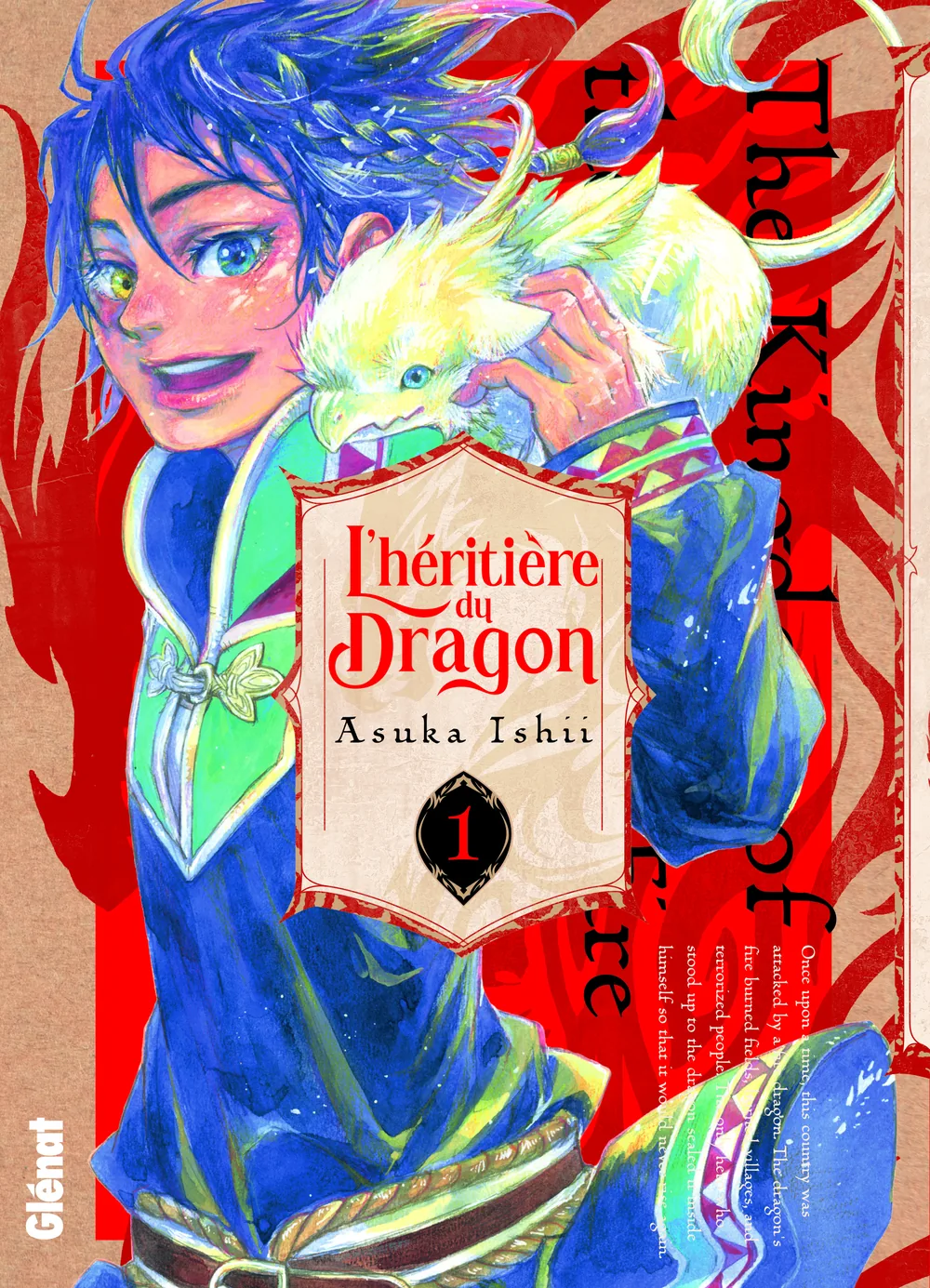 Reading hub · Seinen dark fantasyL'Héritière du Dragon
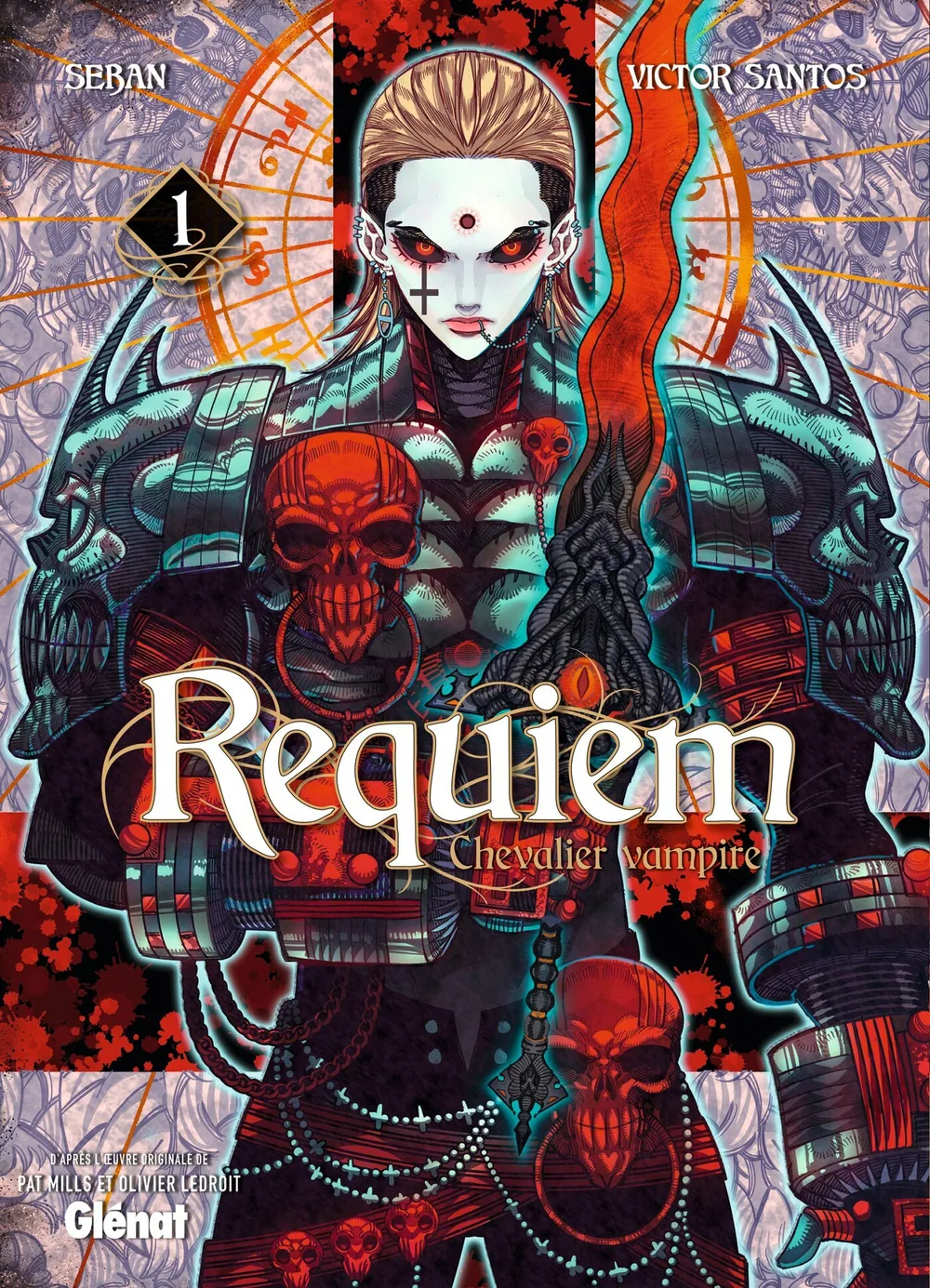 Reading hub · Gothic fantasyRequiem, Chevalier Vampire
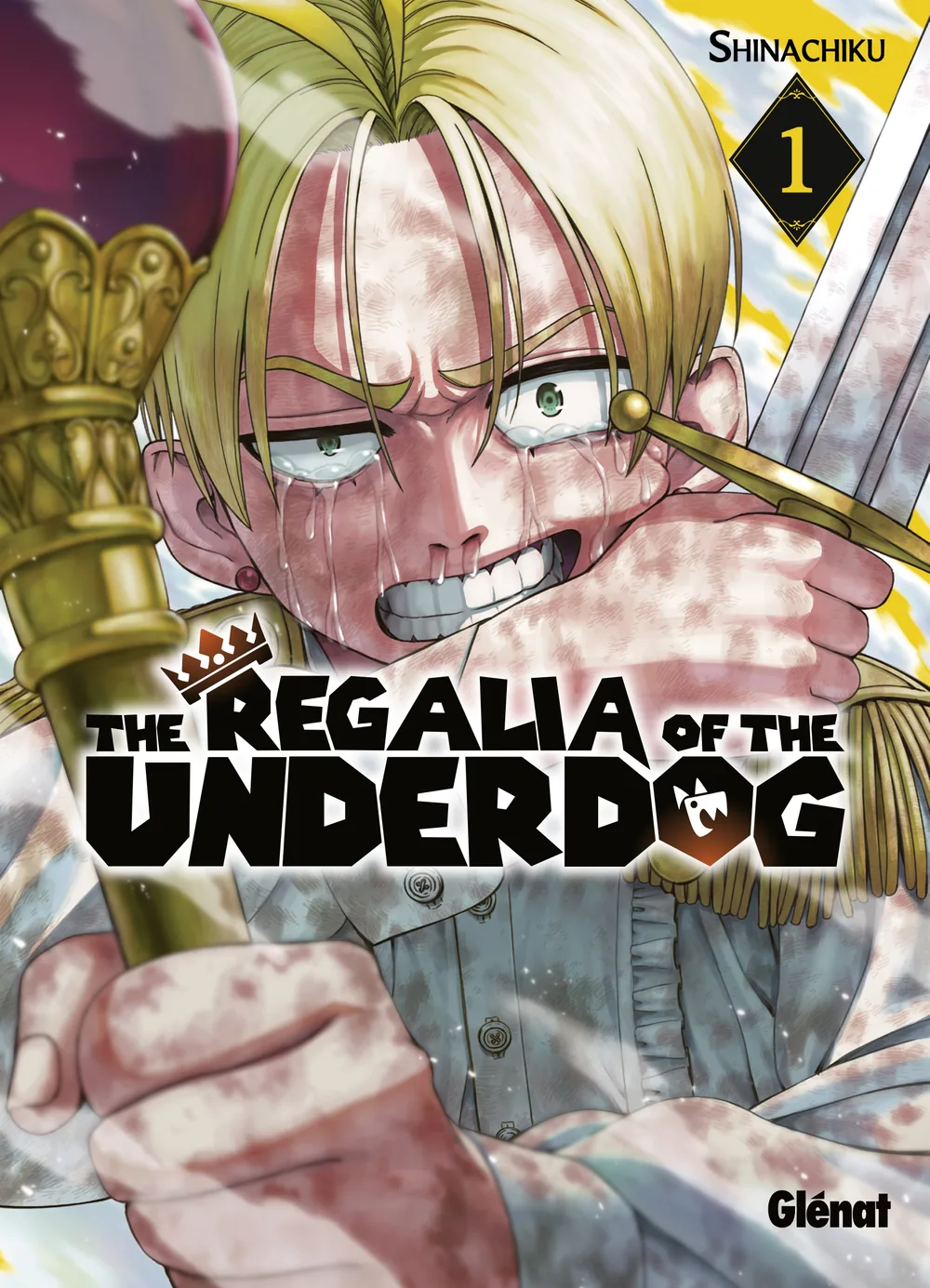 Reading hub · Action shōnenThe Regalia of the Underdog
How we read it. This piece is based on a complete, page-by-page reading of all six volumes (Glénat edition). The per-volume scores, summaries and quotations all rest on that full reading; lines are quoted as closely as possible to the text.
Credits & rights. © Ryo Sumiyoshi / French edition by Glénat. Visuals taken from the book, reproduced for the purposes of review. The work may not be reproduced without permission. Reproduction and text-and-data mining for AI training purposes are prohibited without authorization (art. 4(3) EU dir. 2019/790).