Reading hub · Backstage romantic comedy
Backstage Banri
The public's favorite actor is a tyrant backstage.
Nanase Akashi, a student and die-hard fan of actor Banri Narita, becomes his temporary manager for a summer, filling in for her sister's talent agency. The young man with the "idol face" and flawless on-screen performances turns out to be capricious and harsh with everyone around him once the cameras stop rolling. Between a press scandal, jealous rivals and trust built one small step at a time, these two are worth following. We read the two volumes released so far.
Hub published on .
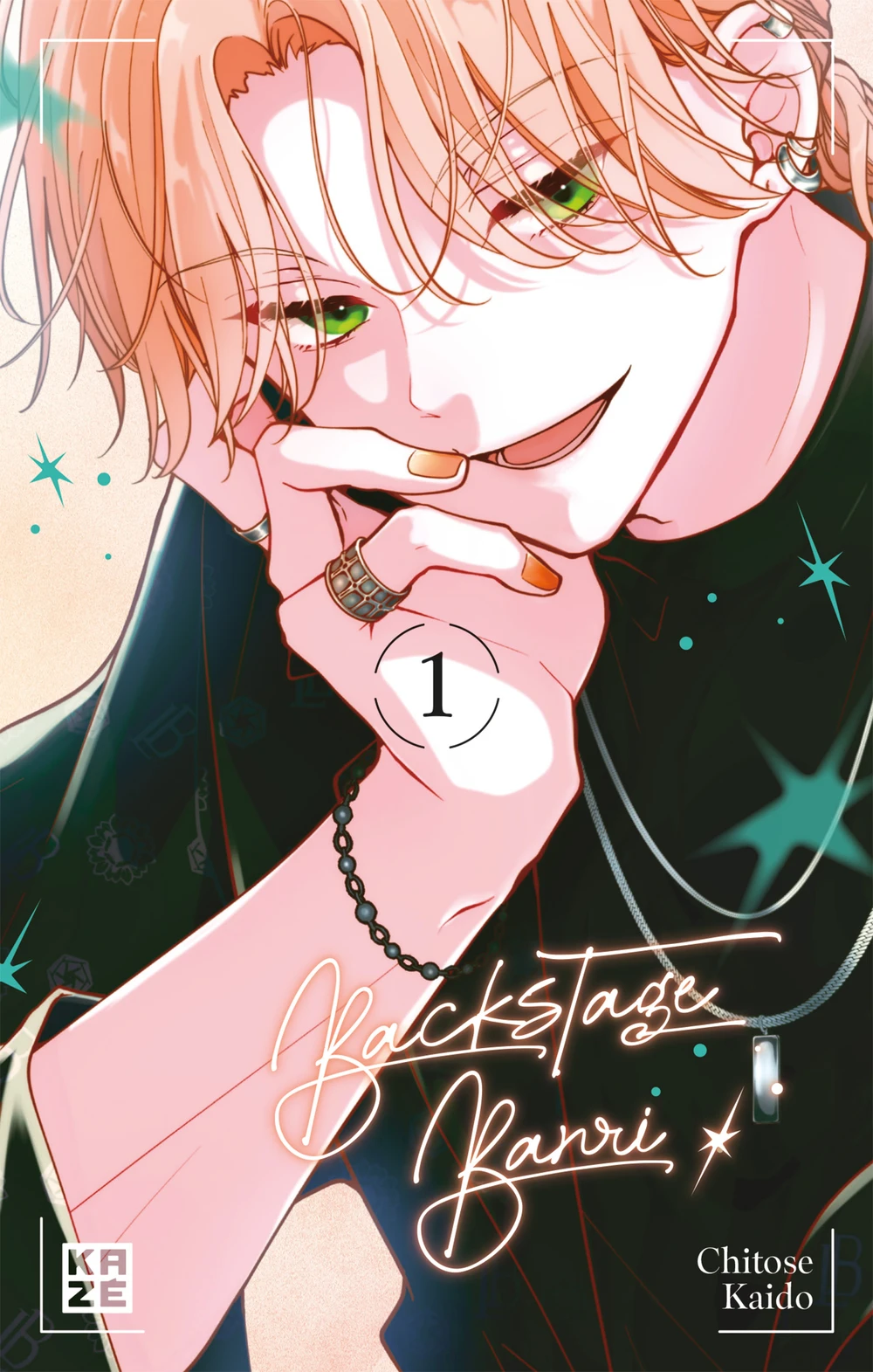 Editor's pickSeptember 2026
© Chitose Kaido 2024 / Hakusensha · French edition Kazé Manga. Official cover.
A backstage romantic comedy built on a classic shōjo contrast: the star adored by the public hides a nasty temper that only the heroine sees through. The original, Uchi no Banri ga Osewa ni Narimasu (うちの万里がお世話になります), is serialized in LaLa magazine (Hakusensha); the French edition is just getting started at Kazé Manga, with two volumes out so far.
Thread 1 · The tyrant and his manager
Banri Narita, a rising actor with a face that would make idols jealous, turns into a completely different person the moment he steps off set: capricious, harsh, and distrustful after being betrayed in the past. Nanase, recruited in an emergency by her agency-director sister, takes it on the chin at first, then stands her ground, and slowly earns his trust. By volume 2, that trust has become feelings, on both sides, though neither one admits it to the other yet.
Thread 2 · Is it worth continuing?
Yes, if you like the "adored idol in public, tyrant backstage" trope done with real heart: the story confronts the abuse-of-power angle head-on instead of dodging it, and the central duo has real chemistry beyond the stock tsundere act. Volume 2 is the better of the two: the romance finally moves, and the supporting cast (a charming rival, a young actor in crisis) gains real depth without stealing the spotlight.
Who's it for?
- You enjoy the "adored idol in public, tyrant backstage" trope when it's handled with heart rather than as a cheap gimmick.
- The closed world of showbiz (filming sets, talent agencies, paparazzi) appeals to you as a setting.
- You want an employer-employee duo that confronts the question of power abuse head-on, instead of brushing it aside.
Not for you if…
- You want a romance that declares itself fast: by the end of volume 2, the feelings are there on both sides, but nothing has been said out loud.
- The possessive-jealousy trope ("don't touch my manager") already wears on you.
- You'd rather have pure plot than a slice of backstage life, punctuated by scandals and setbacks that get resolved quickly.
Two volumes built in "scenes" rather than classic chapters: volume 1 lays down the trust (a fill-in summer job, a press scandal, an official hire); volume 2 lets the backstage romance come to a head, through a hot-spring location shoot, a rivalry that nearly turns to tragedy, and a summer vacation that forces both leads to face facts.
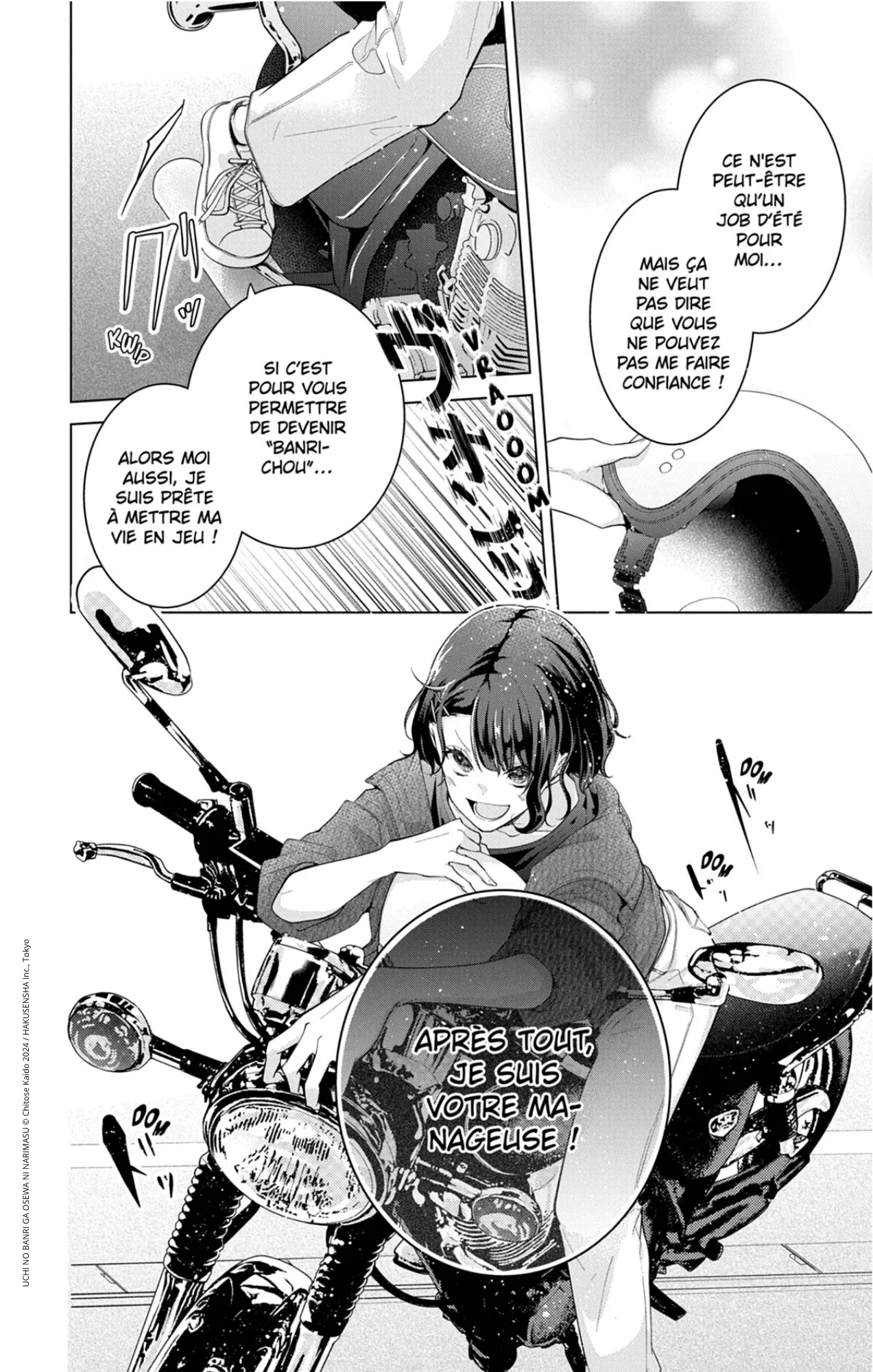
Nanase Akashi, a 21-year-old student and fan of actor Banri Narita, is drafted by her sister, a talent agency director, to become his temporary manager for the summer. The problem: the young man with the "idol face" and flawless acting turns out, away from the cameras, to be awful to everyone around him. Nanase takes it, stands her ground, and finally earns his trust during a shoot that goes wrong: a motorcycle rescue that reveals Banri's past as a "yankee" delinquent along the way. The summer ends with a kiss on the forehead and Nanase's contract being renewed.
Come fall, a tabloid article accuses Banri of abusing his power over his manager — in reality, a rumor blown out of proportion by a paparazzo stalking Nanase herself. The two protect each other from the press, and Banri, behind the scenes, makes sure Nanase gets a real long-term internship contract at the agency.
A year later, Nanase is an official trainee manager, supervised by senior manager Igarashi. She discovers the agency's daily life through two young rival actors, Kajiya and Itsuki, and a televised spicy-food cooking challenge that turns into a test of nerve. Banri's tsundere edge softens a little: small gestures hidden behind "it's for the character," barely-veiled jealousy whenever anyone gets too close to her.
The volume closes on Banri's first major dramatic role, a vengeful antihero in the series Scarlet Bouquet, opposite the popular Reiji Tachibana. The competition rattles him for the first time, while an actress tries to poach Nanase as her own manager. A moment where Banri finally lets his guard down a little, and Nanase gains the confidence to support him.
The takeawayA solid setup volume: the duo has real chemistry, the story takes the abuse-of-power angle seriously instead of brushing it off, and the pacing never sags across the four "scenes." The romance, though, only inches forward.
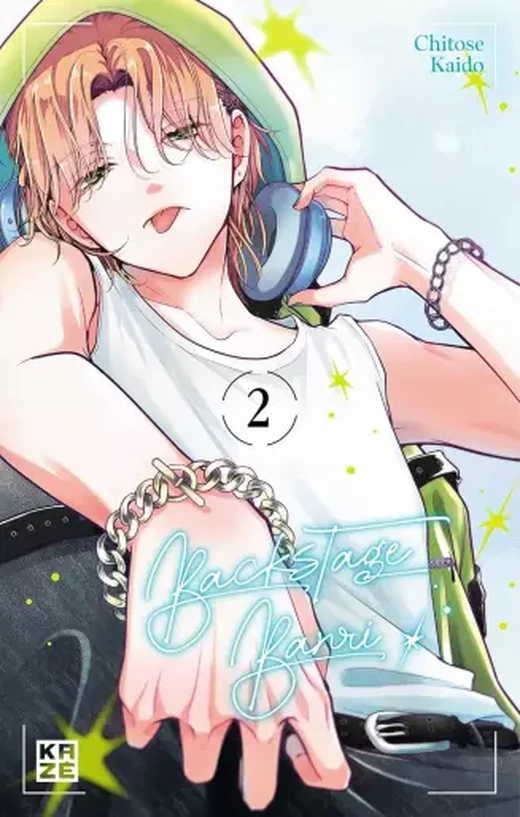
Volume 2 opens on a shoot at a hot-spring inn, where Nanase cheerfully fends off the crew's ghost-story pranks while Banri sulks over the early arrival of his co-star, Reiji Tachibana, a far more popular and clearly very talented actor. The rivalry wakes up an almost childish ambition in Banri: no way is he getting upstaged. The shoot turns dark when young actor Yūto Mishima, consumed by an imagined rivalry and manipulated by a cynical agency exec ("we're disposable goods"), threatens to jump off a cliff mid-scene. Banri and Reiji, on-screen rivals, team up in real life to stop him.
Back in the city, Nanase starts doubting her own feelings: her friends tease her ("you're just in love with Banri, aren't you?"), and a shared laundromat scene, where she lends him a t-shirt and watches him fall asleep on her shoulder, unsettles her more than she lets on. Reiji, for his part, half-admits a confusing affection for "Banri-chou," blurring the line between acting and real feeling. During a fireworks festival, Nanase and Banri narrowly miss running into each other by chance in the crowd, each secretly thinking of the other without admitting it, until a text sent to the wrong contact forces her to face the truth: she really is falling for him.
The shoot for Scarlet Bouquet wraps on a strong trailer reception. During the break that follows, the pair's first real separation (she goes to visit her family) shows Banri, much to his own annoyance, just how much he misses her. The volume closes on a swimsuit photobook trip to Okinawa, chaperoned by Mitsuba, Nanase's sister and the agency's boss: the getaway is spoiled by a film role promised to Banri and then pulled in favor of a better-connected actor. Distraught to see him so frustrated, Nanase vows to help him "by any means necessary" and states, for the first time without hedging, that she has chosen to stand by him — a silent promise, with no formal declaration from either of them.
The takeawayA more confident second volume than the first: the romance finally moves forward (both sides of the feeling are confirmed to the reader, just not to each other yet), and the supporting cast (Reiji, young Yūto) gains real depth without ever stealing the spotlight from the central duo.
« I really am falling in love with Mr. Banri. »Nanase Akashi, volume 2
Like a serialized backstage romantic comedy: each "scene" introduces a new stake (a scandal, a rival, a lost role) without ever letting go of the central duo. Both sides of the feeling are now confirmed to the reader; the only question left is when, and how, they'll say it out loud. The series is ongoing in both Japan and France.
Strengths
- A duo with real chemistry, not just a pile of tsundere tropes.
- The abuse-of-power angle is tackled head-on by the story itself (press scandal, dialogue between the characters), not dodged.
- Dynamic artwork, with good pacing in the action scenes (the motorcycle) and the filming sequences.
- By volume 2, supporting characters (rival Reiji, the young actor in crisis) gain real depth without ever stealing the spotlight from the duo.
Weaknesses
- The genre beats (press scandal, charming rival, possessive jealousy) stay very by-the-book.
- The showbiz setting stays fairly generic: a cartoonish paparazzo, a scandal that gets smoothed over quickly.
- The romance moves slowly: by the end of volume 2, the feelings are confirmed to the reader but still unspoken between the two leads.
The verdict
A backstage romantic comedy that plays its classic contrast ("adored idol in public, tyrant backstage") with real heart: the duo has genuine chemistry, and the story takes the abuse-of-power question seriously instead of brushing it aside. Volume 1 sets things up, volume 2 finally moves the romance forward and fleshes out its little agency world. A young series, but already a solid one.
| Original title | Uchi no Banri ga Osewa ni Narimasu (うちの万里がお世話になります) · serialized in LaLa (Hakusensha) |
|---|---|
| Author | Chitose Kaido |
| Publisher | Kazé Manga (Pegasus Manga France) |
| Volumes read | Volumes 1 and 2 |
| Reading direction | right to left |
| Translation (FR edition) | Sasha Boucheron & Manon Debienne |
| ISBN | Vol. 1 · 978-2-8203-5564-5 · Vol. 2 · 978-2-8203-5592-8 |
| Price / release (FR) | €7.15 · Vol. 1 September 16, 2026 · Vol. 2 November 12, 2026 |
| Series | ongoing (JP & FR) · volume 3 announced |
| Score by volume | Vol. 1 · 7.5 — Vol. 2 · 8 (/10) |
| Average score | 7.8 / 10 |

À lire ensuite
 Reading hub · Office romantic comedyElle et moi dans l'open space
 Review · ShōjoYubooh, la magie des songes
 Review · SeinenThe Last Witch's Story
How we read it. This piece is based on a complete, page-by-page reading of volumes 1 and 2 (French Kazé Manga edition). Summaries, running gags and quotations all rest on that full reading. Volume 1's cover and interior panel come from the official press kit; volume 2's cover, for which no press kit was available, uses the official artwork as distributed by the publisher on manga-news.com. Volume 3, announced in the author's afterword, will be added to this hub once we've read it.
Credits & rights. © Chitose Kaido 2024 / Hakusensha Inc., Tokyo (vol. 1) · © Chitose Kaido 2025 / Hakusensha Inc., Tokyo (vol. 2) · French edition Kazé Manga (Pegasus Manga France SAS). Volume 1's cover and panel are taken from the official press kit, reproduced with the publisher's authorization; volume 2's cover reuses the publisher's official artwork, for review purposes. Reproduction and text-and-data mining for AI training purposes are prohibited without authorization (art. 4(3) EU dir. 2019/790).